
The African Ivory Route
A privately curated fly-in expedition tracing the Indian Ocean trade networks that carried African ivory, gold and ceramics between the Swahili Coast, the stone kingdoms of the interior, Mapungubwe and Great Zimbabwe, and Song-Yuan China.
Cape Town · Mapungubwe · Thulamela · Great Zimbabwe · Sofala Coast · Kilwa · Zanzibar
For a thousand years, African ivory reached the imperial courts of China, the workshops of India and the merchant houses of Arabia. The trade corridors that carried ivory from the interior to the coast were the same corridors that carried enslaved people — two parallel systems of extraction on the same ancient routes.
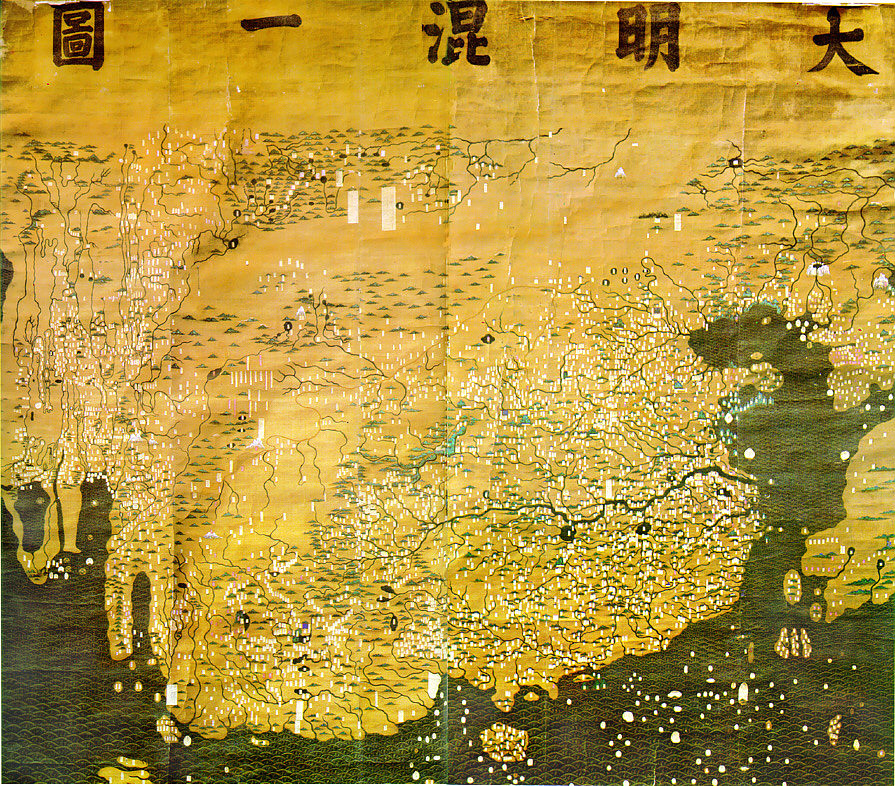
This journey begins in Cape Town — where a 1389 Chinese map of Africa hangs in the South African Parliament — then traces the ivory from its source at Mapungubwe through the stone kingdoms and across the Sofala coast to the Swahili ports of Kilwa and Zanzibar, where it entered the Indian Ocean world. Seven stations. Four countries in the African core route. Four core UNESCO World Heritage Sites, with optional Mozambique and Quanzhou extensions.
This journey examines the ivory trade’s historical role, its human and ecological costs, and the conservation questions it continues to raise — including the forced labour and enslavement that carried the burden of those systems.
The Trade Networks That Connected Africa to the Indian Ocean World
African ivory reached the imperial courts of China, the workshops of India, and the merchant houses of Arabia for over a thousand years. The supply chain that made this possible ran from the interior of southern and eastern Africa — where elephants roamed in vast herds — through stone-walled kingdoms that controlled the trade, to coastal ports that shipped it across the Indian Ocean on monsoon-driven dhows.
Mapungubwe and Great Zimbabwe were the inland capitals that organised the ivory and gold trade for centuries. Thulamela, deep inside what is now the Kruger National Park, is the archaeological proof — Chinese celadon ceramics and Indian glass beads found thousands of kilometres from where they were made. Sofala, on the Mozambique coast near modern Bazaruto, was the shipping point where ivory left the continent. Kilwa Kisiwani was the port that controlled the export. And Stone Town of Zanzibar was the market — where ivory was weighed, priced and sold to buyers from three continents.
This route begins with the map, moves to the source, and then follows the ivory outward — from the inland kingdoms to the Sofala coast, the Swahili ports and the Indian Ocean world. The traveller traces the supply chain that the medieval buyer never saw: the kingdoms that produced the ivory, the landscapes the elephants inhabited, and the archaeological evidence that connects them.
In the early fifteenth century, the Ming Dynasty admiral Zheng He reached the East African coast with a fleet of extraordinary scale — according to traditional Chinese accounts, hundreds of ships and tens of thousands of men. He traded with African coastal kingdoms and brought back ivory, gold and a giraffe for the imperial court. But the Song Dynasty celadon found at Thulamela and Kilwa predates Zheng He by two centuries. The trade connection between Africa and China was not a single expedition — it was a thousand-year system. Mapungubwe’s gold-foil rhinoceros and the celadon vase in a Kruger bushveld settlement are two ends of the same supply chain.
Cape Town — The Map
The journey begins not with ivory, but with evidence. In the South African Parliament hangs a replica of the Da Ming Hun Yi Tu (大明混一图) — the Amalgamated Map of the Great Ming Empire, created in 1389. Painted on silk and measuring over 17 square metres, it shows the outline of the African continent a century before the Portuguese reached the Cape. China formally presented the replica in 2002.
This is the interpretive prologue. The map reflects how knowledge of Africa circulated in the Chinese world before European colonial contact. The journey begins with a map that reminds us: Africa was present in Chinese geographic knowledge before the Portuguese rounded the Cape.
Mapungubwe — The Source
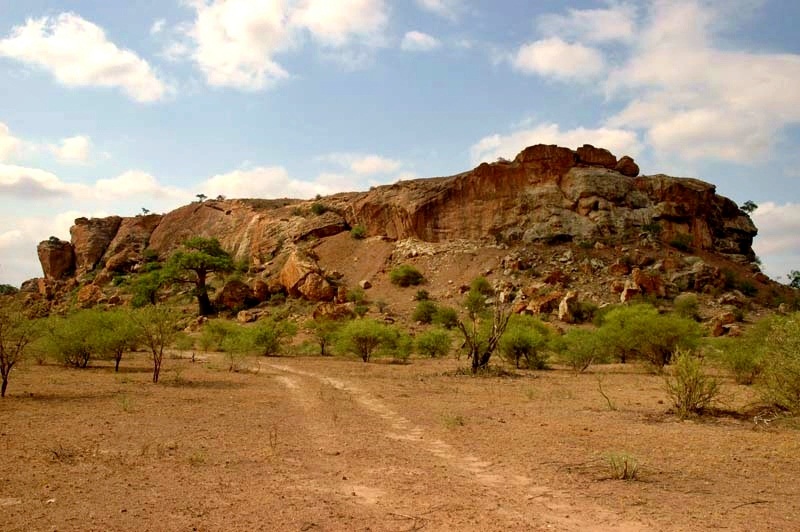
Fly to the confluence of the Limpopo and Shashe rivers. Mapungubwe was the first complex state in southern Africa (c. 1075–1220 CE) — the earliest source of the ivory and gold trade that would later sustain Great Zimbabwe and the Mutapa Kingdom. The gold-foil rhinoceros, the hilltop burial goods, and the trade artefacts document a kingdom that was connected to the Indian Ocean world seven centuries before Europeans arrived.
Thulamela & Greater Kruger — The Network Evidence
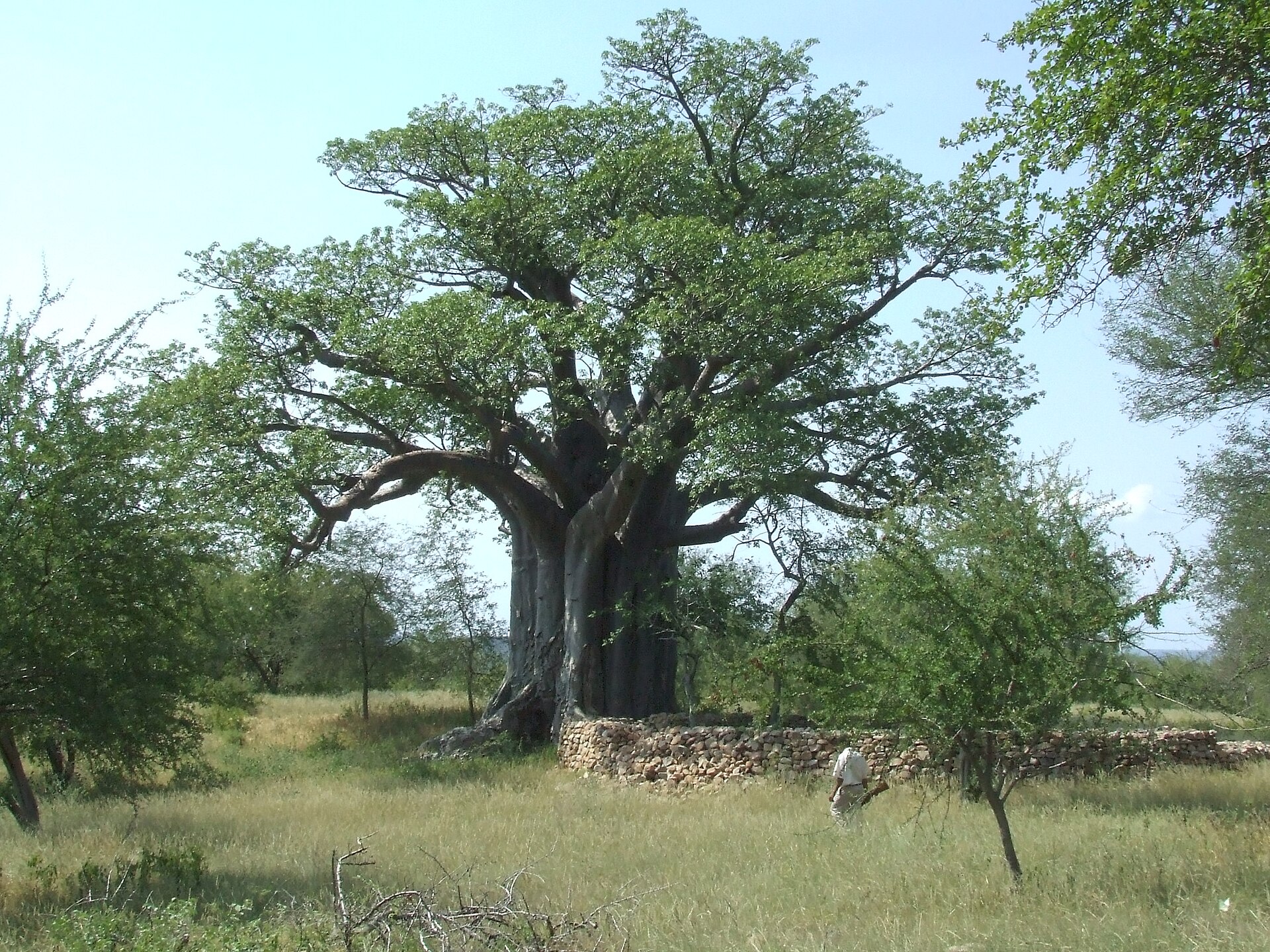
Thulamela is the archaeological evidence that the trade network extended deep into the bushveld. Chinese celadon ceramics, glass beads from the Indian Ocean trade, and gold artefacts found at this 15th-century settlement prove that the system you began tracing on a 1389 map in Cape Town reached this far inland.
Morning and evening game drives in the Greater Kruger — Big Five territory. The elephants that move through these landscapes today inhabit a world shaped by centuries of ivory trade. The herds survived what the kingdoms did not.
Great Zimbabwe & Malilangwe — The Stone Capital
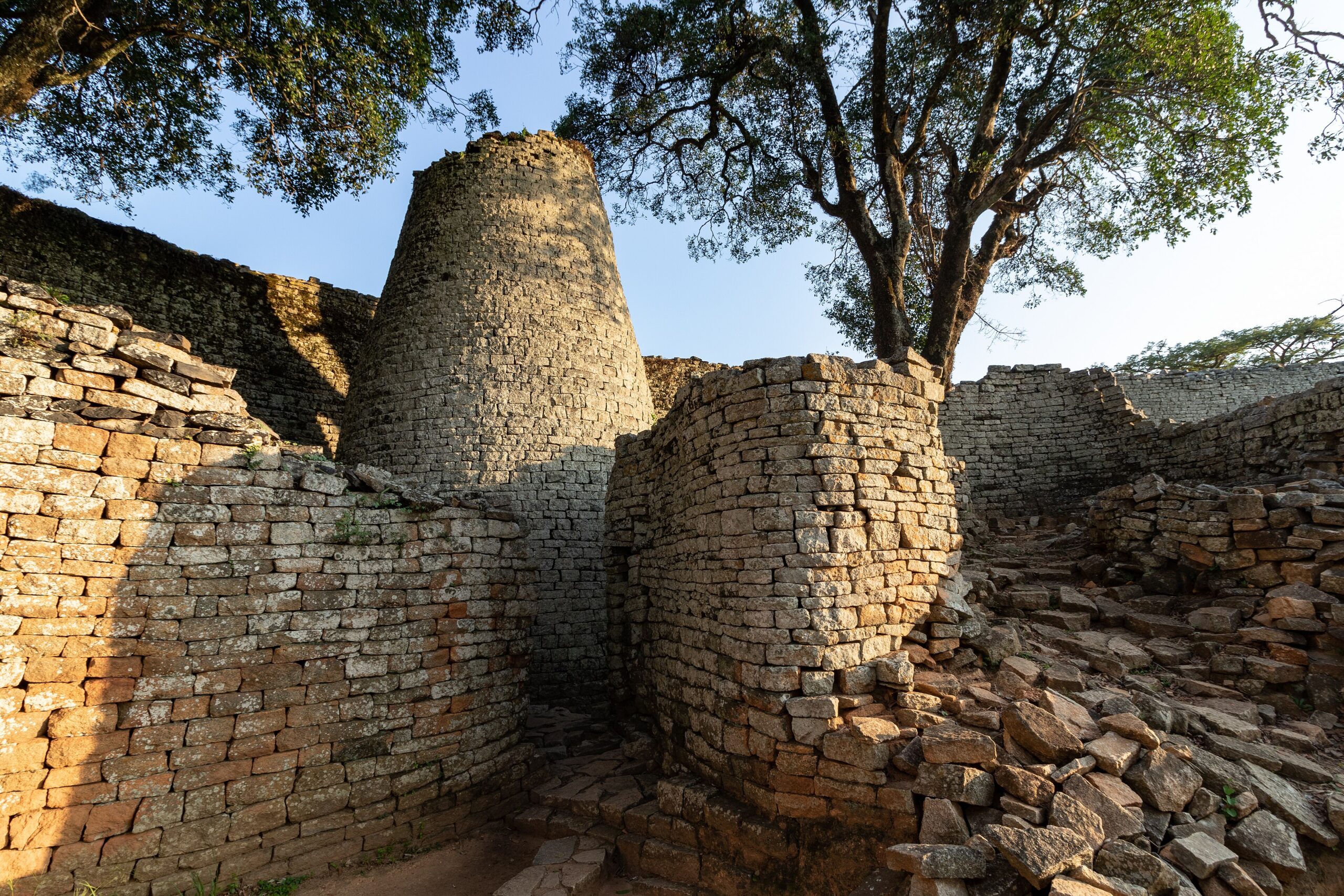
Fly to the Malilangwe Wildlife Reserve. From here, a day excursion to Great Zimbabwe — the largest stone structures in sub-Saharan Africa. The wealth of this kingdom was closely connected to long-distance trade networks carrying gold, ivory and imported luxury goods. The Great Enclosure, the Conical Tower, the Hill Complex — these are the architecture of a trading power.
When Great Zimbabwe declined around 1450, the trade network transferred northward to the Mutapa Kingdom — known to the Portuguese as Monomotapa — which controlled the ivory and gold routes from the Zambezi valley to the Sofala coast. When the Portuguese arrived at Sofala in 1505, it was the Mutapa king they negotiated with.
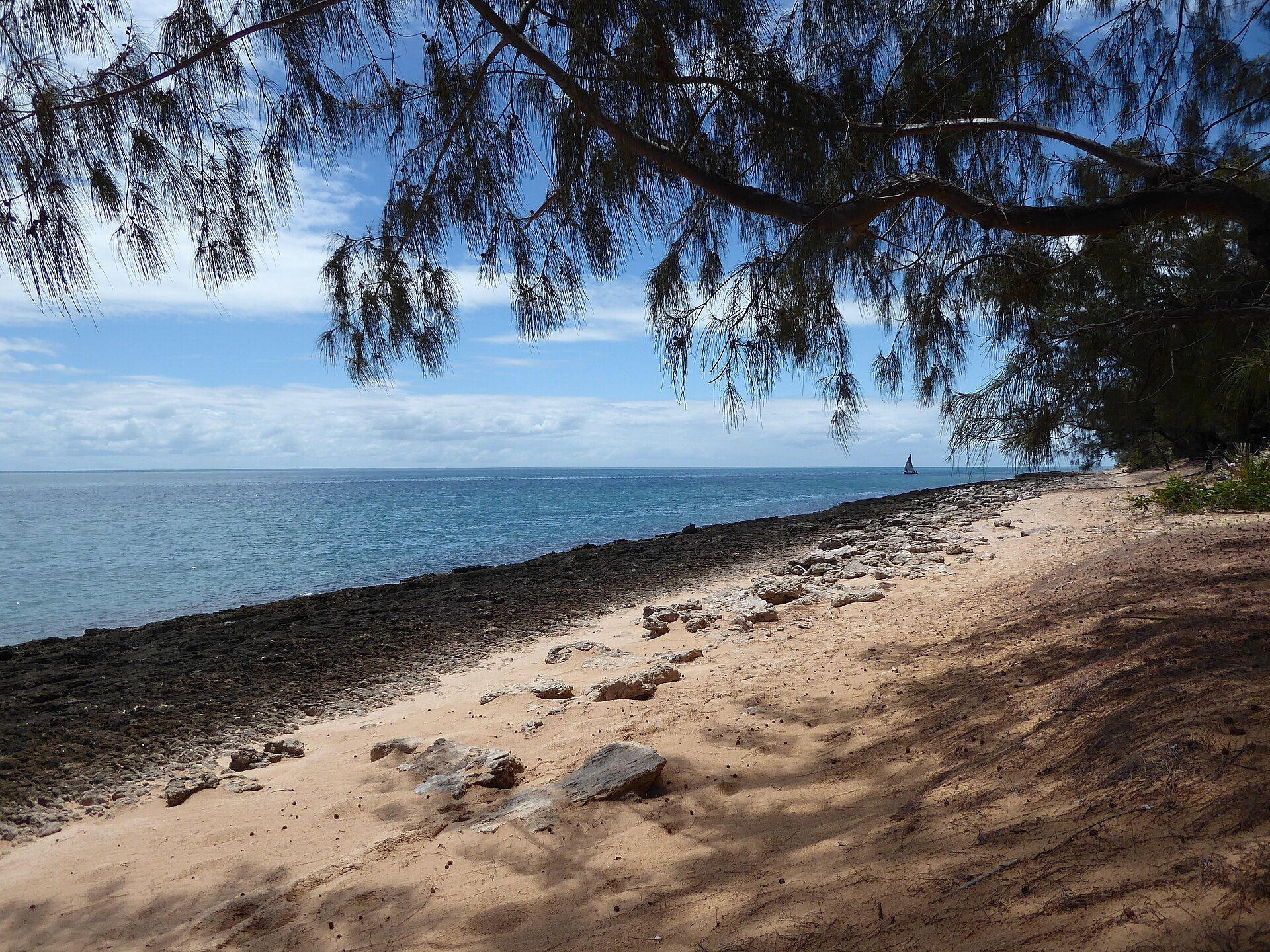
Bazaruto & the Sofala Coast — The Maritime Gateway
Fly to Vilanculos and transfer to the Bazaruto Archipelago. The Sofala coast was the historical gold and ivory port — the place where goods from the interior of southern Africa were loaded onto dhows bound for Kilwa, Zanzibar and the Indian Ocean. Portuguese traders established a trading post here in the early 16th century, drawn by the same wealth that had sustained Kilwa for centuries.
Today the Bazaruto Archipelago is a marine national park — dugongs, whale sharks, coral reefs. The journey pauses here between the inland kingdoms and the Swahili ports. Optional extension to the Island of Mozambique (UNESCO WHS 1991) — another node in the same Indian Ocean network.
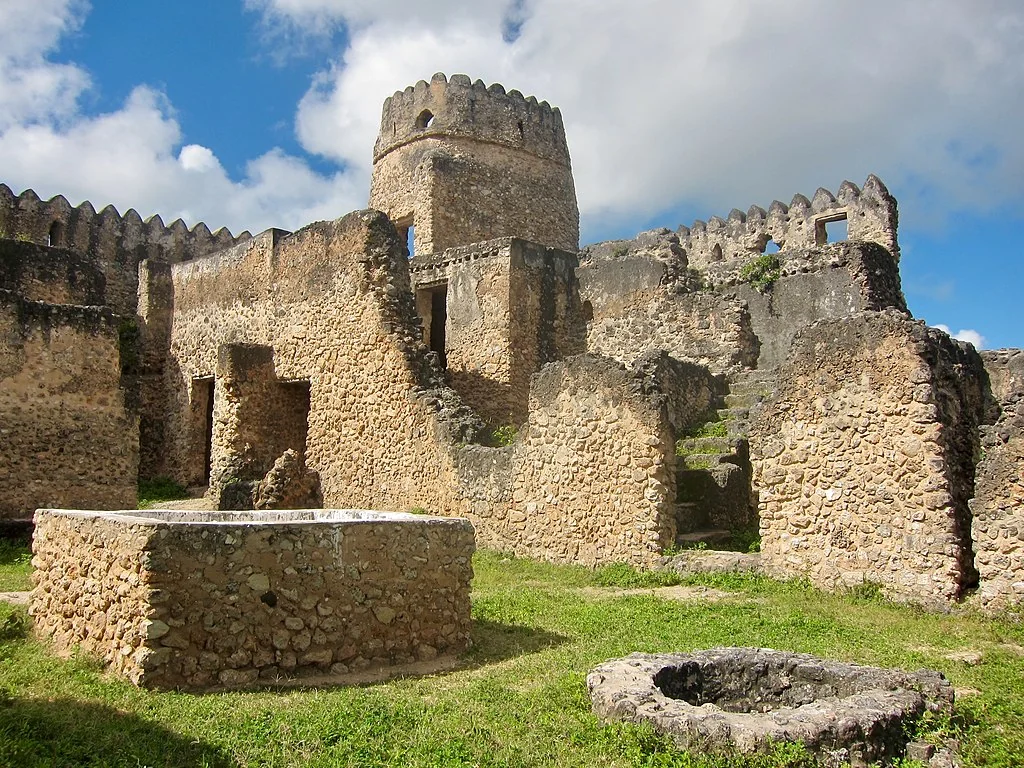
Kilwa Kisiwani — The Swahili Entrepôt
Kilwa Kisiwani was one of the great Swahili ports through which gold and ivory from the interior entered the Indian Ocean trade. In the fourteenth century, Kilwa was among the wealthiest cities in the world. Its Great Mosque was the largest in sub-Saharan Africa. The ruins on the island — mosques, palaces, a vast commercial complex — are the physical evidence of what ivory wealth could build.
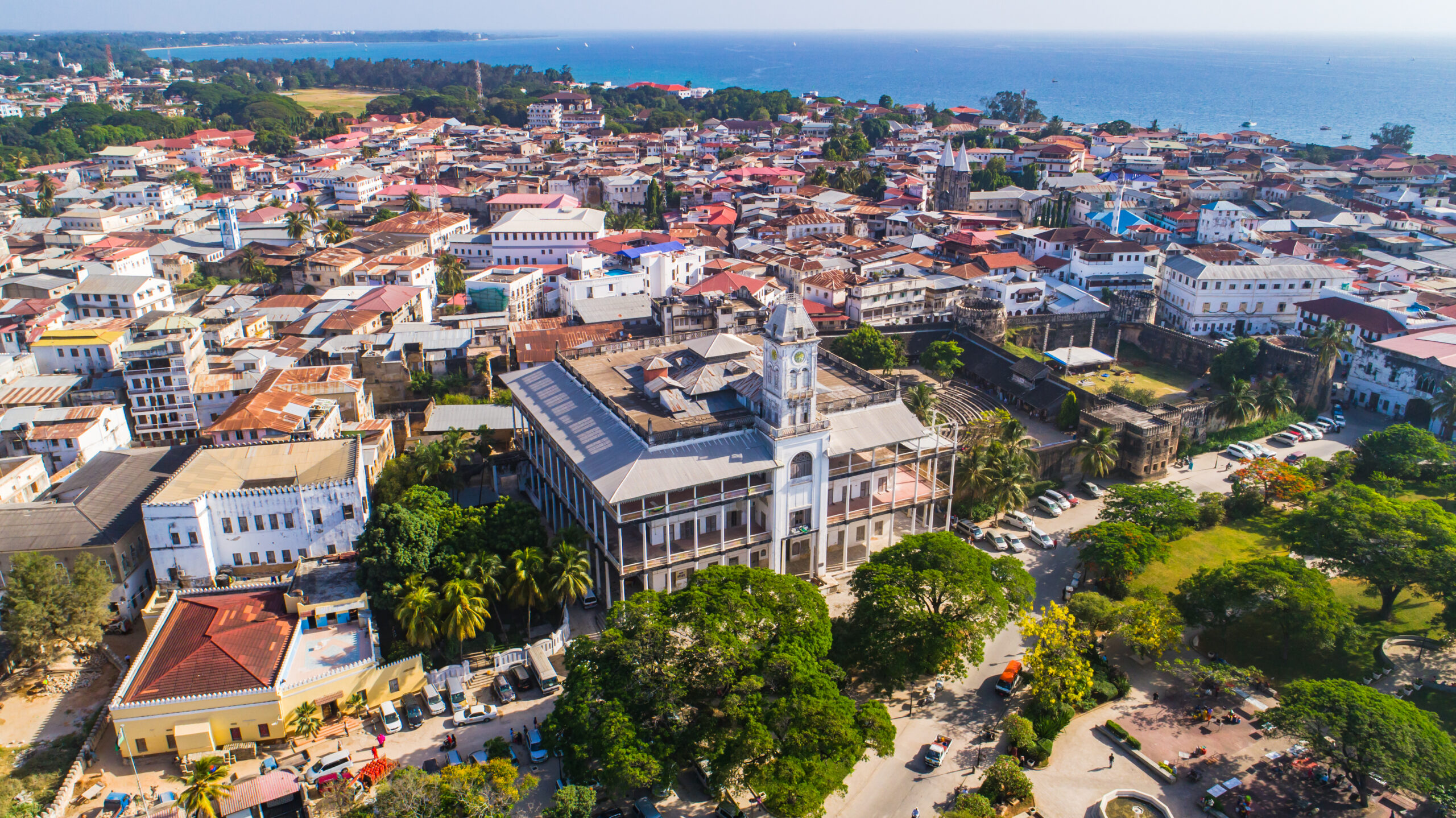
Stone Town of Zanzibar — The Indian Ocean Market
Stone Town was one of the principal markets through which ivory from the interior entered the Indian Ocean trade. The same market that traded ivory also traded enslaved people — two parallel systems of extraction on the same ancient routes.
The journey that began with a map in Cape Town ends at the market that map already knew. The ivory that left Mapungubwe, passed through Great Zimbabwe, and reached the coast at Sofala and Kilwa — arrived here, in Stone Town, and was sold to buyers from China, India, Arabia and Europe.
How the Route Connects
A fly-in expedition across four countries. Six flight segments, approximately 3,800 km total air distance.
Mashatu Main Lodge
Tintswalo Safari Lodge
Singita Pamushana
andBeyond Benguerra
Fanjove Private Island
Park Hyatt Zanzibar
Optional: Victoria Falls (connects to Great Africa Crossing) · Quanzhou, China (from Zanzibar via Nairobi)
All routings and aircraft are indicative and subject to availability and final validation.
Where African Ivory Reached the World
The ivory and gold that left Mapungubwe, Great Zimbabwe and Kilwa did not stop at the African coast. Monsoon-driven dhows carried it across the Indian Ocean to three continents.
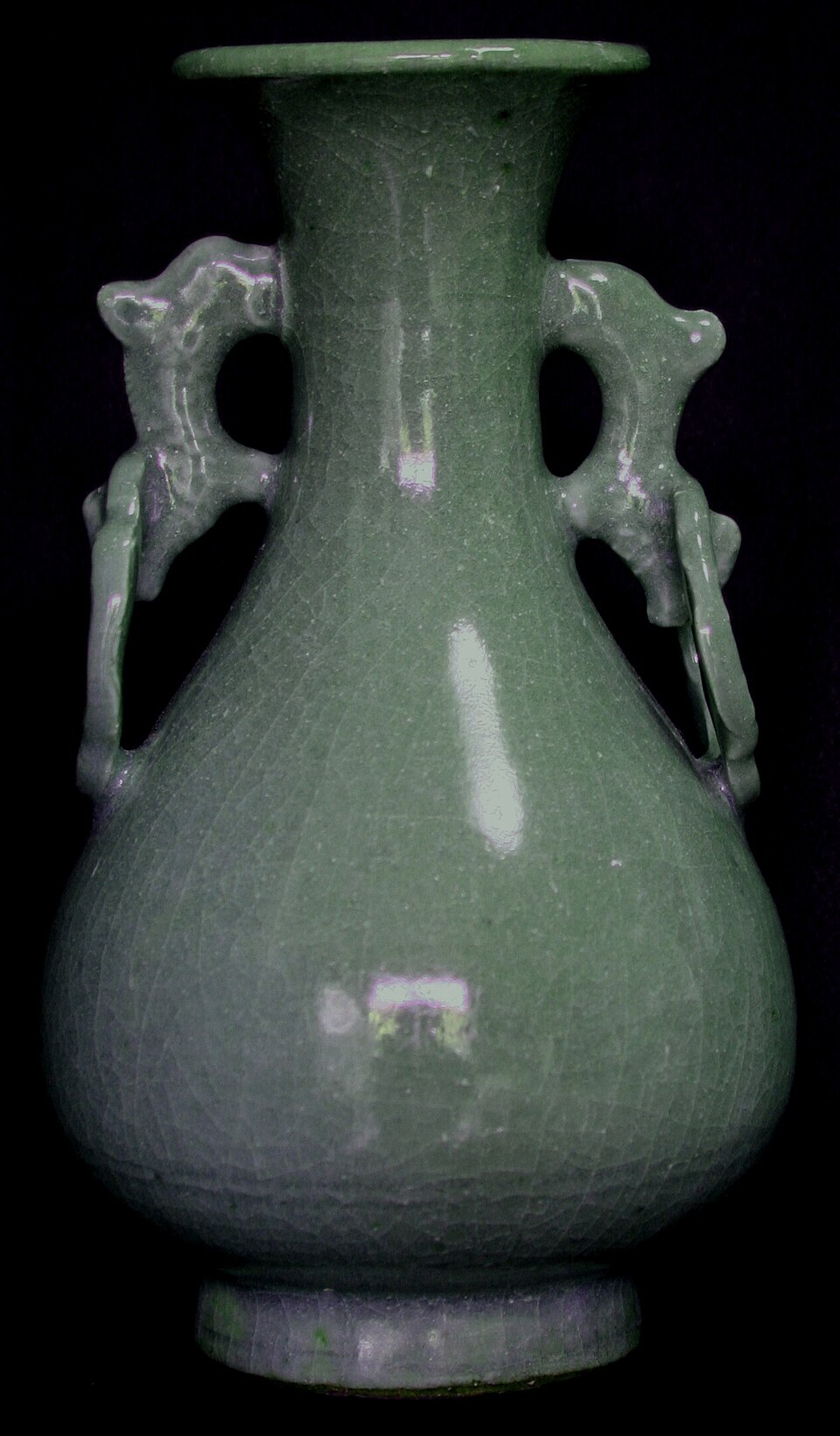
Song Dynasty celadon — the same type found at Thulamela and Kilwa, 10,000 km from where it was made.
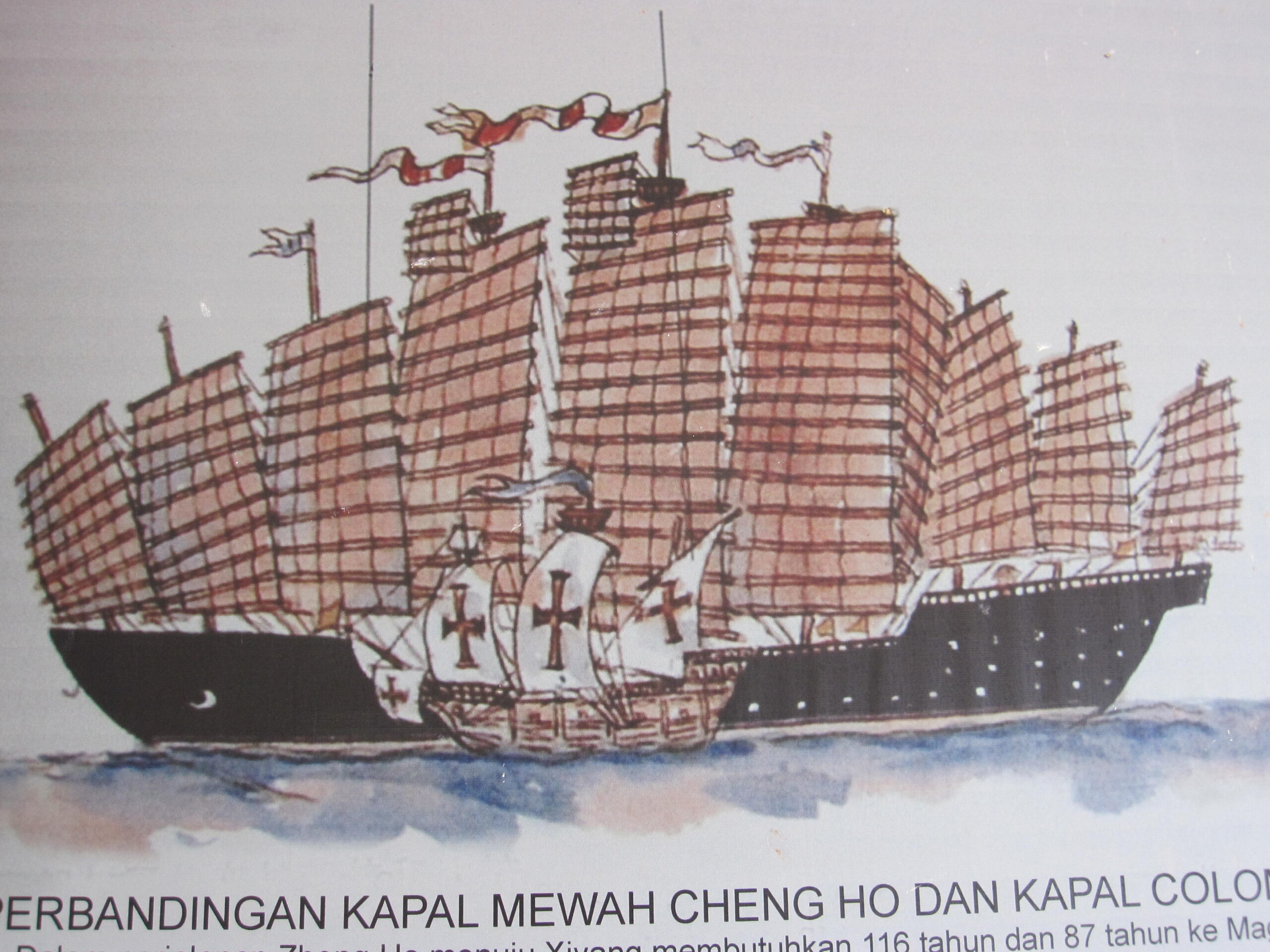
Zheng He’s treasure ship compared to Columbus’s Santa María.
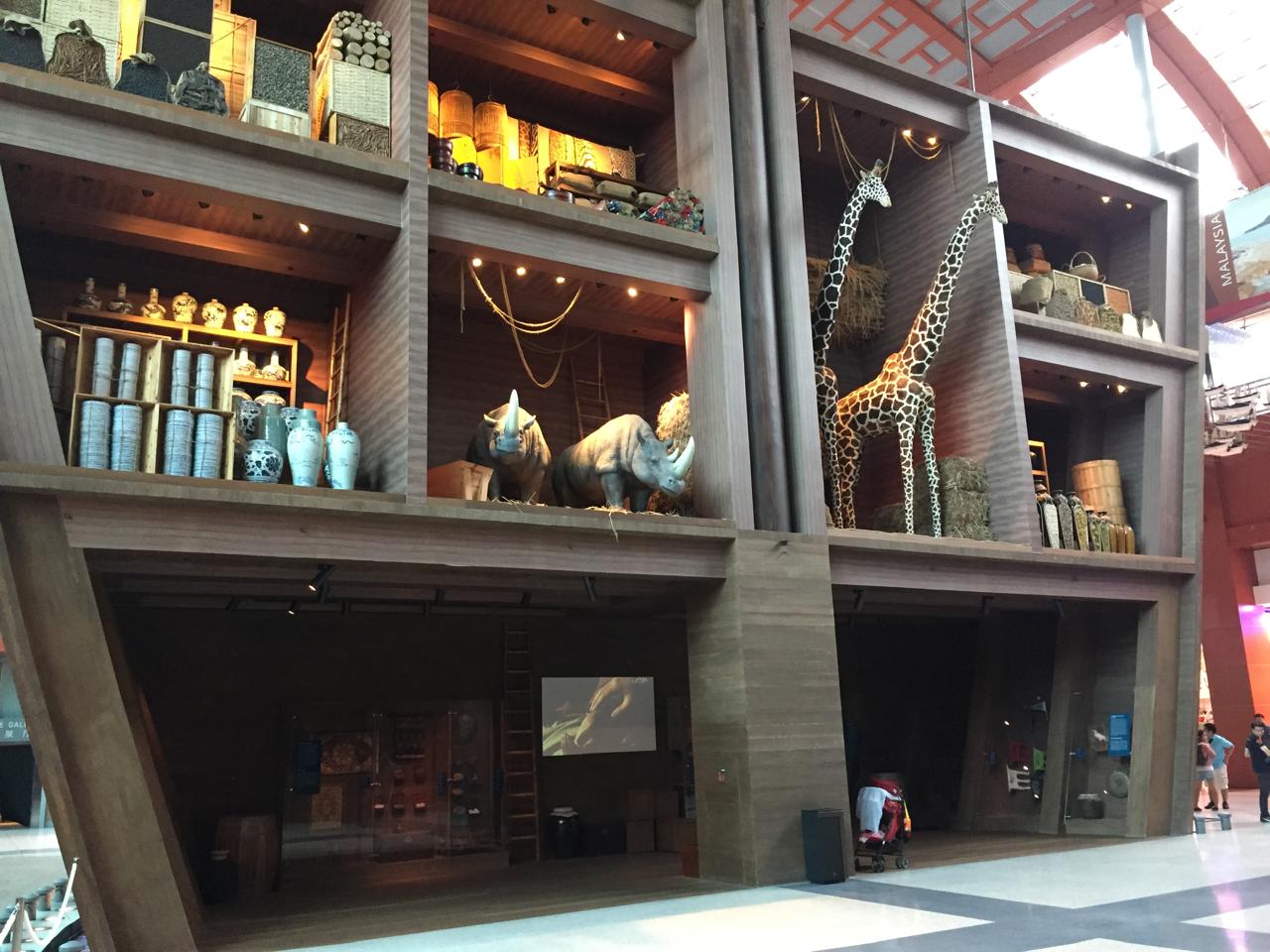
Inside a treasure ship: African giraffes, rhinoceros and celadon porcelain. Maritime Experiential Museum, Singapore.
Chinese celadon ceramics found at Thulamela, Kilwa and Great Zimbabwe prove trade links dating to the Song Dynasty (960–1279). The celadon was produced in kilns like those at Dehua near Quanzhou — the port that UNESCO inscribed in 2021 as “Emporium of the World in Song-Yuan China” (WHS 1561). Quanzhou was connected to around 100 ports along the Maritime Silk Roads — including Zanzibar.
In the early fifteenth century, the Ming admiral Zheng He reached the East African coast with his treasure fleet. According to traditional Chinese accounts, the fleets numbered hundreds of ships and tens of thousands of men. Zheng He traded with African coastal kingdoms and brought back ivory and a giraffe for the Ming court.
The celadon found at Thulamela predates Zheng He by two centuries. Africa’s connection to China was not a single expedition — it was a thousand-year system. UNESCO has inscribed both ends of the trade network: Quanzhou (2021) and Mapungubwe (2003).
The Da Ming Hun Yi Tu (大明混一图), created in 1389, shows the outline of the African continent a century before the Portuguese reached the Cape. Painted on silk and measuring over 17 square metres, it includes recognisable features such as the Nile and what some scholars identify as the Drakensberg mountains. In 2002, China formally presented a digital replica to the South African Parliament.
Glass beads, textiles and metalwork found across southern and eastern Africa. Gujarat and the Malabar Coast were key trading partners. Indian merchants were resident in Kilwa and Zanzibar for centuries.
Omani merchants controlled the Zanzibar trade from the 17th century. The monsoon winds that carried dhows between Oman and East Africa also carried ivory, gold, frankincense and enslaved people.
Portuguese traders arrived at Sofala in 1505, drawn by the gold trade. By the 19th century, European demand for ivory — piano keys, billiard balls, cutlery handles — drove the trade to its most destructive peak.
Four Core UNESCO World Heritage Sites — with Optional Extensions
Stone Town of Zanzibar
One of the principal ivory and slave-trade centres of the western Indian Ocean. Where African, Arab and Indian merchants traded for over a thousand years.
Kilwa Kisiwani & Songo Mnara
The medieval port that controlled ivory and gold exports. Among the wealthiest cities in the fourteenth-century world. Where the Gold Route meets the Indian Ocean.
Great Zimbabwe
One of the most significant stone-built heritage landscapes in sub-Saharan Africa. Its wealth was closely connected to long-distance trade in gold, ivory and imported luxury goods.
Mapungubwe Cultural Landscape
The source. First complex state in southern Africa. The gold-foil rhinoceros. Where the ivory and gold trade began, a century before Great Zimbabwe rose.
Mosi-oa-Tunya / Victoria Falls
An optional extension connecting the African Ivory Route with the Great Africa Crossing. One of southern Africa’s great natural World Heritage landscapes.
Island of Mozambique
Another node in the Indian Ocean network. Five civilisational layers compressed onto one island. Extension via the Sofala coast segment.
References to UNESCO World Heritage Sites are factual references to sites inscribed on the UNESCO World Heritage List. Southern Cross Experiences is an independent travel company and does not imply UNESCO endorsement of this journey.
Lodges That Invest in the Land and the People Around Them
Indicative accommodation examples, selected for location, character and their relationship with conservation and community initiatives. Final accommodation is confirmed during private route design.
Luxury hotel on the Stone Town waterfront. Historic building, contemporary comfort. The ivory market at the doorstep.
Private island within a marine conservation area. Local community employment and marine protection programme. Kilwa Kisiwani day trip by boat.
Island lodge on the Sofala coast, with conservation and community development partnerships. Bazaruto National Park setting.
Malilangwe Trust: a restored wilderness with community development, education and conservation programmes. Great Zimbabwe day trip.
Private conservancy at the Mapungubwe confluence. One of the largest elephant populations in the region. Archaeological heritage partnerships.
Big Five lodge on Mnisi community-owned land, with community development partnerships. Thulamela archaeological site access via Kruger.
Alternative island option on the Sofala coast: a conservation-focused lodge within the Bazaruto marine national park.
Luxury hotel, V&A Waterfront or City Bowl. The journey’s opening chapter — where the Da Ming Hun Yi Tu hangs in the South African Parliament.
Begin Where the Celadon Was Made
For international travellers, Quanzhou can be added as an optional epilogue after Zanzibar. For Chinese-market groups, the journey may also begin in Quanzhou before continuing to Africa. Either way, it connects the other end of the trade network: Quanzhou, inscribed by UNESCO in 2021 as the “Emporium of the World in Song-Yuan China”. The Dehua kilns near Quanzhou produced the celadon that was shipped across the Indian Ocean to East Africa — the same ceramic type found at Thulamela and Kilwa.
For China-market groups, the journey may begin in Quanzhou — walk the stone docks where the porcelain was loaded, visit the Dehua kilns where it was fired — before continuing to Cape Town and across Africa. For international travellers, Quanzhou can be added after Zanzibar as an optional epilogue, connecting the African journey back to the other end of the Indian Ocean trade network.
Includes: Dehua Kilns (UNESCO component), Kaiyuan Temple, Maritime Museum, Qingjing Mosque, stone docks.
Flight: Quanzhou (Jinjiang Airport) → Zanzibar via Nairobi or Dar es Salaam.
UNESCO WHS: Quanzhou: Emporium of the World (2021, ID 1561)
Designed Around You
This itinerary is a route framework, not a fixed departure. Each Southern Cross journey is privately curated around your dates, travel rhythm, interests and preferred level of comfort.
Additional nights may be added in Cape Town, Zanzibar or another gateway destination. The route can also be shortened, extended, upgraded with private aviation, or combined with another SCE journey — including the Signature Safari, or a private Quanzhou extension for Chinese-market groups.