
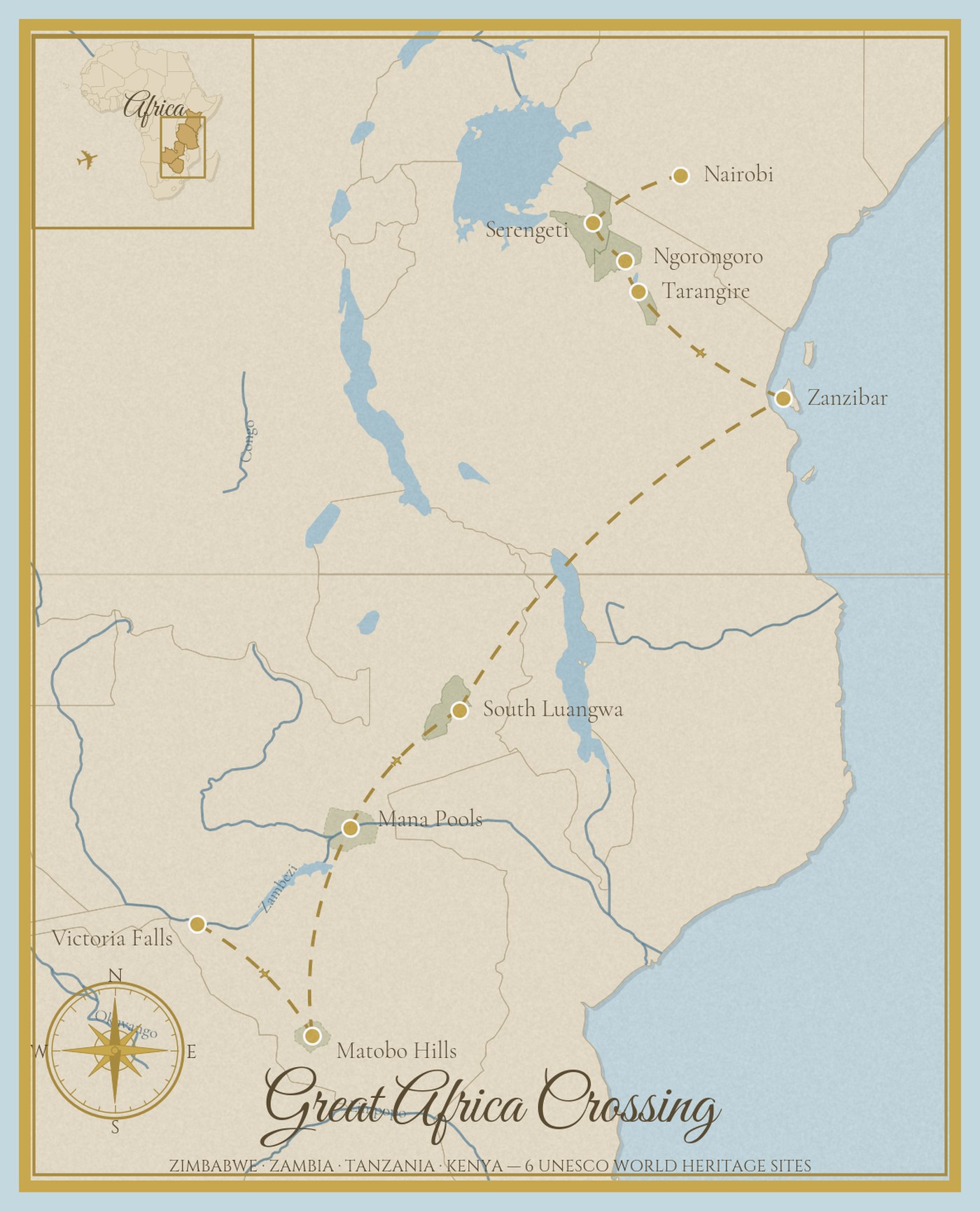
Sixteen days, eight stations, six UNESCO World Heritage Sites — from the oldest rock art in southern Africa through the Zambezi wilderness and the spice island of Zanzibar to the cradle of humankind at Olduvai Gorge.
This journey begins where the Great African Waters ends — at Victoria Falls. But where the Waters route arrived from the north through lakes and rivers, this route departs northeast into entirely different territory. It follows the deepest layers of human presence in Africa: from the granite shelters of the Matobo Hills, where the San painted for forty thousand years, through the Zambezi wilderness and the valley where the walking safari was born, across to the Swahili coast at Zanzibar — where African, Arab and Indian Ocean cultures fused for a thousand years — then inland through the great elephant herds of Tarangire to Olduvai Gorge, where 1.8 million years of human evolution lie exposed in a single ravine. Six UNESCO World Heritage Sites. The journey can follow the Southern Cross Signature Safari from Cape Town to Victoria Falls — and continue from there with this route northeast to the Serengeti.
| Days | Station | Nights | Heritage Highlight | |
|---|---|---|---|---|
| 1 – 2 | Victoria Falls, Zambia River lodge · Flight of Angels · Zambezi cruise 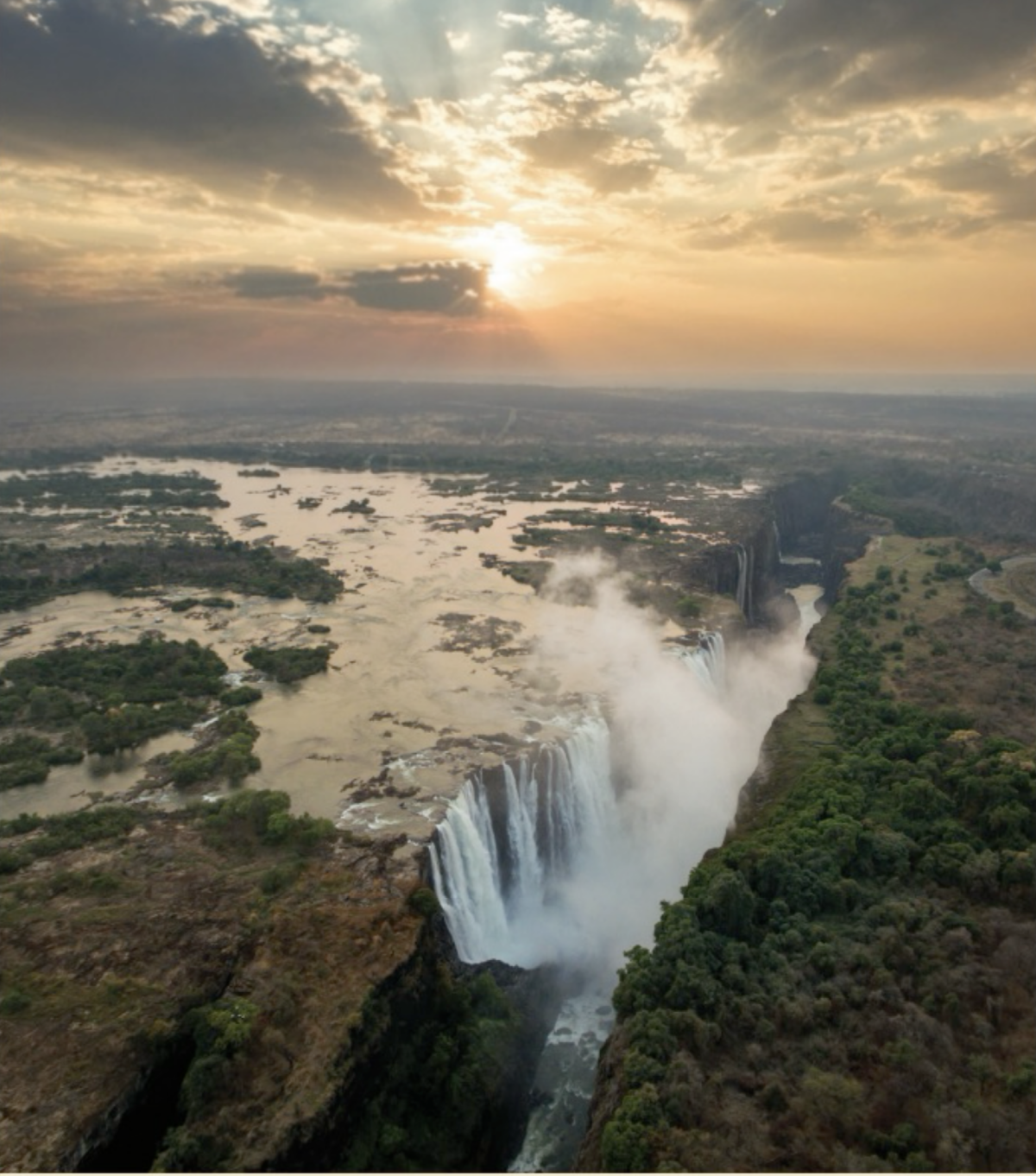 | 2 | Mosi-oa-Tunya (UNESCO) | ▼ |
The journey begins where the Zambezi drops 108 metres into basalt — Mosi-oa-Tunya, the smoke that thunders. A river lodge above the gorges on the Zambia side, with direct access to the falls and the upper river. From here, the route turns northeast into Zimbabwe's granite heartland. Flight of AngelsZambezi CruiseDevil's PoolVictoria Falls Bridge
| ||||
| 3 – 4 | Matobo Hills, Zimbabwe San rock art · Balancing rocks · Black & white rhino 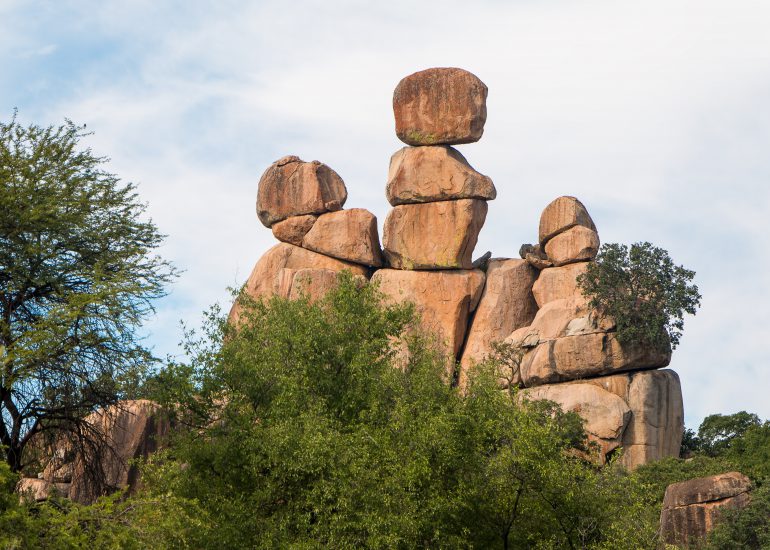 | 2 | Matobo Hills (UNESCO) | ▼ |
The oldest cultural layer of the journey. The Matobo Hills hold one of the highest concentrations of rock art in southern Africa — San paintings spanning forty thousand years in granite shelters among the balancing rocks. The landscape is also one of the best sites in Africa for tracking black and white rhino on foot. Cecil Rhodes chose to be buried here, calling it "View of the World." San Rock ArtRhino TrackingBalancing RocksWalking SafariSpiritual Landscape
| ||||
| 5 – 6 | Mana Pools, Zimbabwe Zambezi floodplain · Walking safari · Painted dog 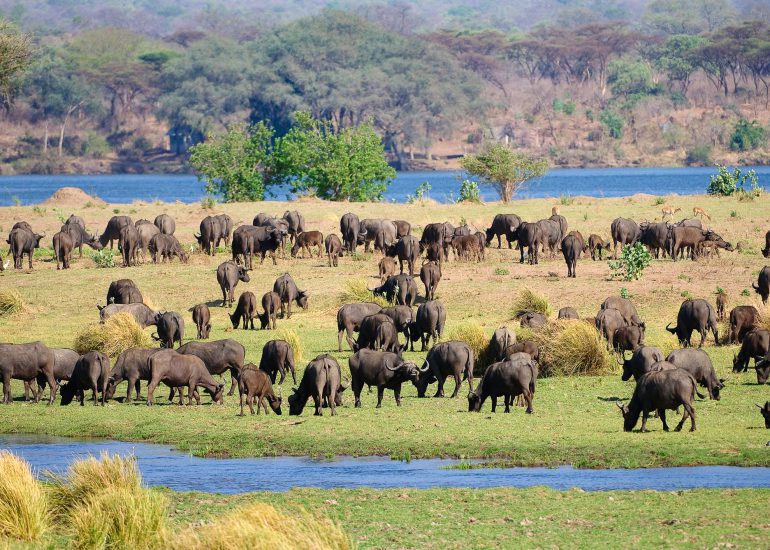 | 2 | Mana Pools (UNESCO) | ▼ |
The Zambezi's floodplain at its widest and wildest. Mana — "four" in Shona, for the four pools that remain when the river recedes — is one of Africa's last true walking-safari wildernesses. Elephant, buffalo, lion, leopard, and one of the strongest painted-dog populations on the continent. The canoe safari here follows the main Zambezi channel with hippo, crocodile, and elephant drinking at the bank. Walking SafariCanoe SafariPainted DogBig FourZambezi Floodplain
| ||||
| 7 – 8 | South Luangwa, Zambia Birthplace of walking safari · Highest leopard density 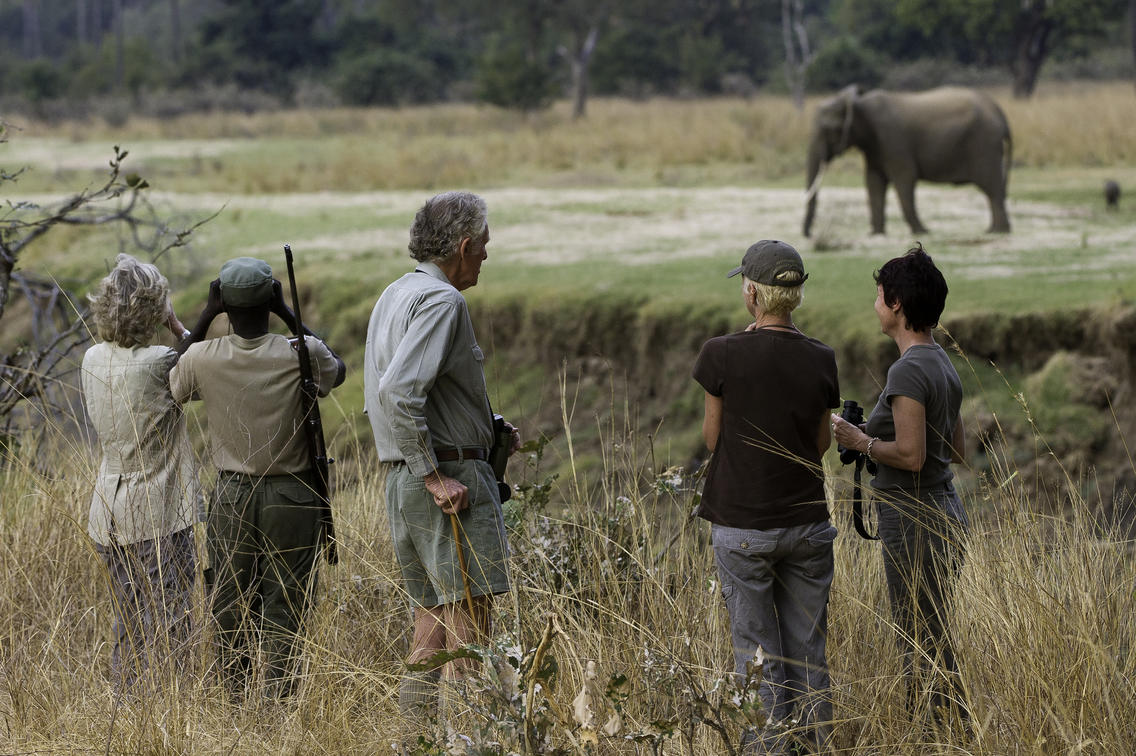 | 2 | Birthplace of the walking safari | ▼ |
Norman Carr invented the walking safari here in the 1950s — the idea that walking through the bush, unarmed except for a guide's knowledge, was the deepest way to experience Africa. South Luangwa remains the finest expression of that idea. The Luangwa River creates an enclosed ecosystem with one of the highest leopard densities on the continent. Thornicroft's giraffe, found nowhere else on earth. Walking SafariLeopardNight DriveThornicroft's GiraffeLuangwa River
| ||||
| 9 | Zanzibar — Stone Town, Tanzania Swahili coast · Stone Town · Spice island  | 1 | Stone Town of Zanzibar (UNESCO) | ▼ |
A single night on the Swahili coast — the cultural counterpoint to the wilderness that frames the rest of the journey. Stone Town is a thousand years of African, Arab, Indian and European trade layered into coral-stone streets. The oldest functioning Swahili merchant quarter in East Africa. Spice-market walk, rooftop dinner above the Indian Ocean. From here, the route turns inland — back into the bush for the final four stations. Stone Town UNESCOSwahili CultureSpice MarketIndian Ocean
| ||||
| 10 – 11 | Chem Chem / Tarangire, Tanzania Private concession · Great elephant herds · Baobab landscape 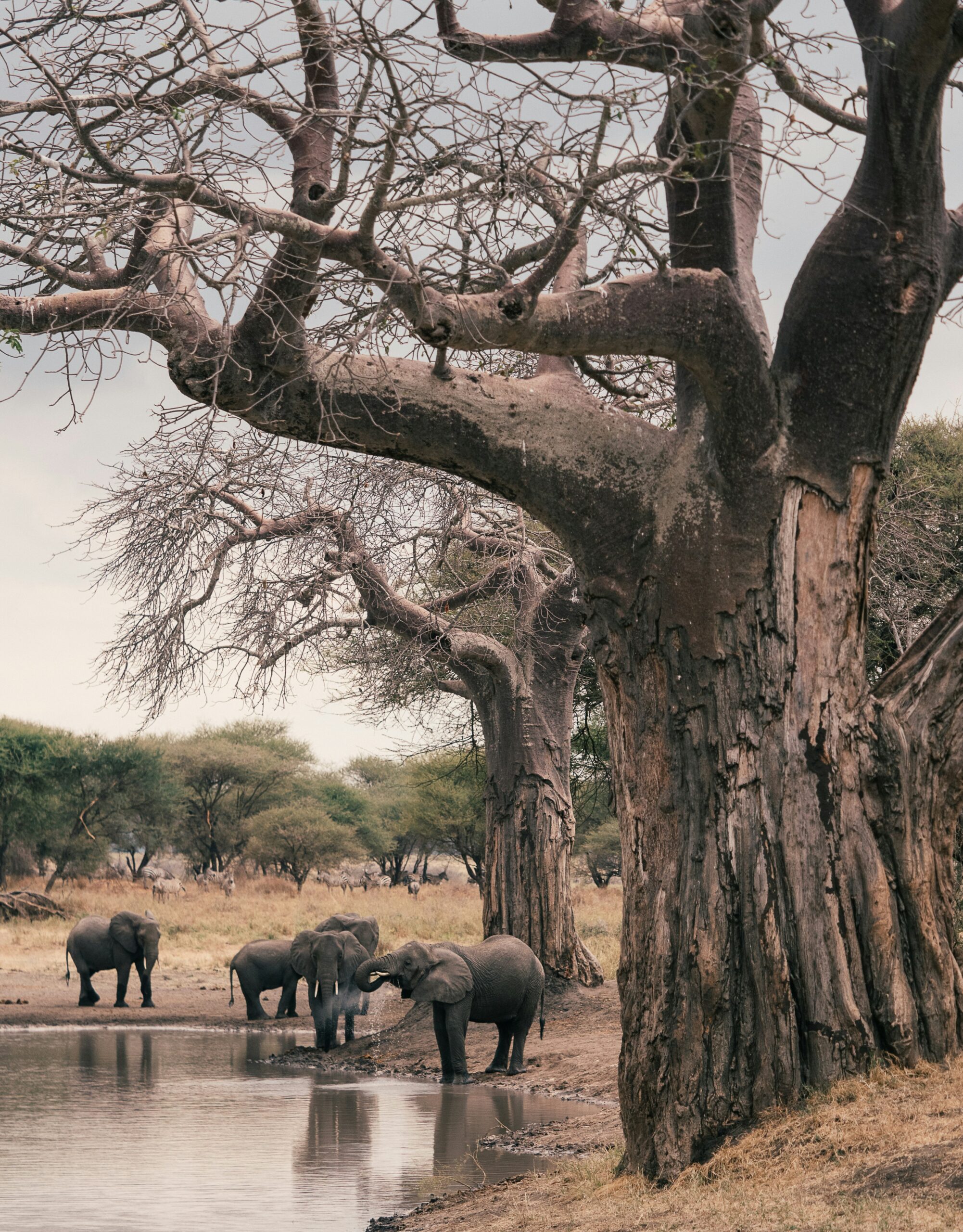 | 2 | Chem Chem Concession · Tarangire NP | ▼ |
A private 20,000-hectare concession between Tarangire National Park and Lake Manyara — the "slow safari" station of the journey. Tarangire holds one of the largest elephant populations in East Africa, moving through ancient baobab woodland. The concession allows what the national parks cannot: walking safaris, night drives, and unhurried game viewing with no other vehicles. From Zanzibar's coral streets to elephant herds beneath baobabs — the Indian Ocean to the Rift Valley in a single flight. Walking SafariElephant HerdsBaobab WoodlandNight DriveSlow Safari
| ||||
| 12 – 13 | Ngorongoro, Tanzania Crater caldera · Olduvai Gorge · Cradle of humankind 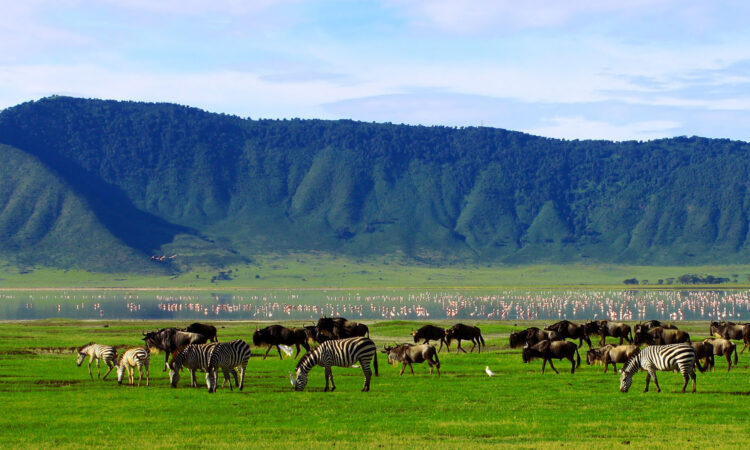 | 2 | Ngorongoro Conservation Area (UNESCO) | ▼ |
The deepest layer of human presence on the journey — and the deepest on Earth. The Ngorongoro Crater is the world's largest unbroken caldera: twenty kilometres across, 600 metres deep, holding 25,000 large mammals. But the heritage significance lies thirty minutes west at Olduvai Gorge, where 1.8 million years of human evolution are exposed in a single ravine. From San rock art at Matobo to Homo habilis at Olduvai — the journey's cultural arc spans the full depth of what it means to be human in Africa. Crater Game DriveOlduvai GorgeMaasai CultureBig FiveShifting Sands
| ||||
| 14 – 15 | Serengeti, Tanzania Private concession · Great Migration · Big Five 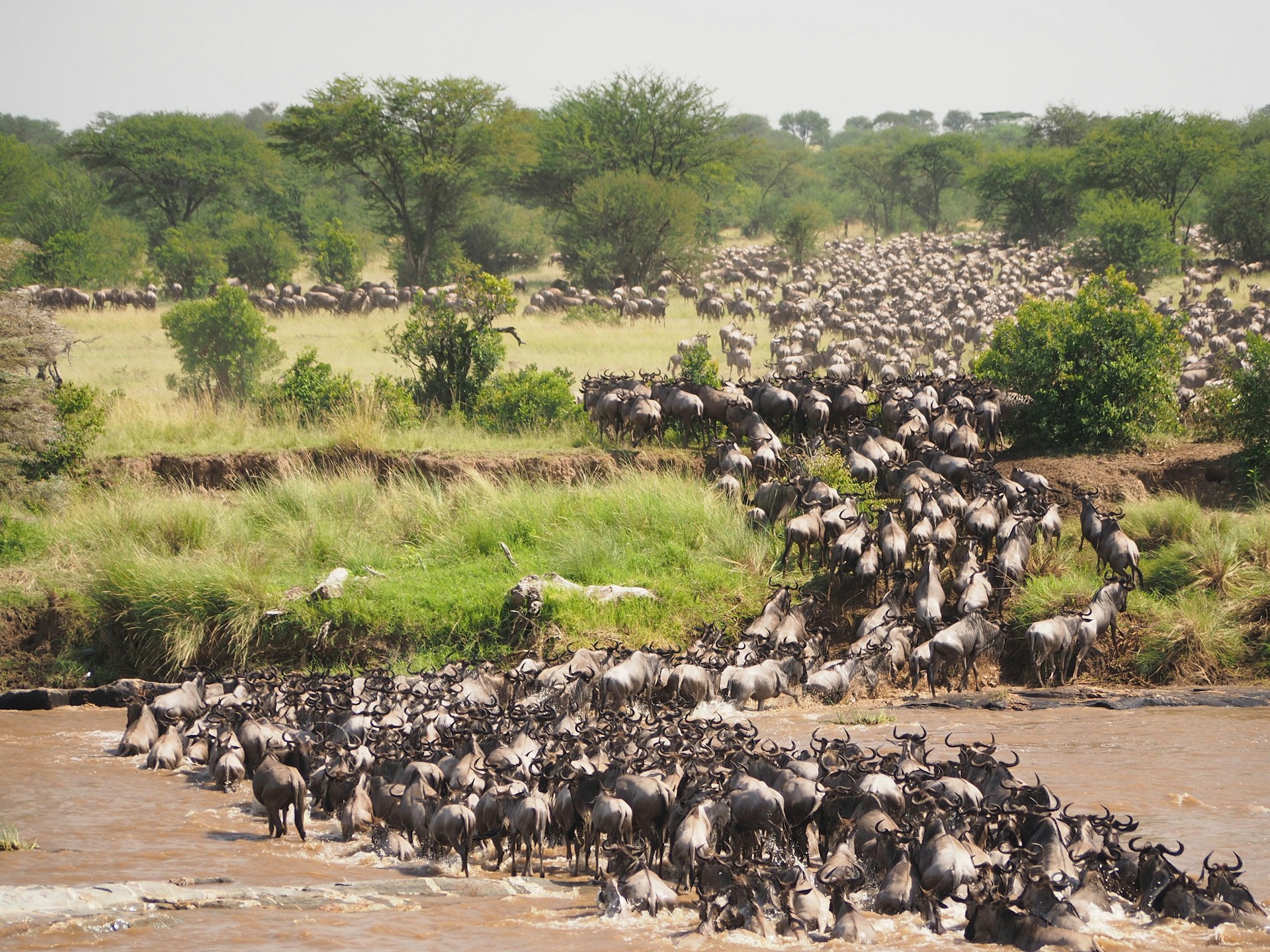 | 2 | Serengeti NP (UNESCO) | ▼ |
The journey closes on the Serengeti — the ecosystem that shaped early humanity. The seasonal rains drive the Great Migration of 1.5 million wildebeest. A private concession on the western corridor: 350,000 acres of wilderness, substantially fewer vehicles than the central Serengeti. The landscape early humans walked through still moves to the same rhythm. Great MigrationBig FiveBalloon SafariWalking Safari
| ||||
| 16 | Departure | — | — | |
Click on a station to discover more
15 nights · 16 days — Six UNESCO World Heritage Sites visited
The geological anchor of the journey. The Zambezi has been cutting its gorges for 150,000 years — a timescale that bridges the natural and the human. The falls are the departure point: from water as geological force, the route turns to stone.
The oldest artistic layer. Granite dwalas shaped by three billion years of erosion hold one of the highest concentrations of San rock art in southern Africa — paintings spanning forty thousand years. The spiritual significance of the landscape predates any recorded history: the Mwari cult, one of the most powerful oracular traditions in southern Africa, is still practised here. Matobo is the oldest artistic station on the route — the southern anchor of a cultural arc that reaches its deepest point at Olduvai Gorge.
The Zambezi at its widest — a floodplain ecosystem inscribed for its outstanding natural value. Mana Pools is one of the last places in Africa where walking unguided is still permitted for experienced safari visitors. The four seasonal pools that give the park its name concentrate wildlife as the river recedes, creating one of the most intense dry-season game-viewing experiences on the continent.
The cultural counterpoint. Stone Town is the only station on this route inscribed for its human-built heritage rather than its natural landscape. A thousand years of Swahili merchant culture compressed into coral-stone streets, carved wooden doors, and rooftop terraces overlooking the Indian Ocean. The town was the hub of the East African slave and spice trades — the intersection where African, Arab, Indian, and European worlds met. On a journey that spans forty thousand years of human presence in southern Africa and 1.8 million years at Olduvai, Zanzibar adds a more recent but equally layered chapter: what humans built when the trade routes reached the coast.
The deepest layer. Ngorongoro is one of only 39 sites worldwide inscribed for both natural and cultural significance. The crater itself — twenty kilometres across, holding 25,000 large mammals — is the natural component. The cultural component is Olduvai Gorge, thirty minutes west: 1.8 million years of human evolution exposed in a single ravine. From San paintings at Matobo to Homo habilis at Olduvai — the full arc of what it means to be human in Africa.
The ecosystem that shaped early humanity. The seasonal rains that drive the Great Migration — 1.5 million wildebeest following a precipitation pattern unchanged for millennia — created the savanna landscape through which Homo erectus first walked upright. The Serengeti is both the closing chapter of the journey and, in evolutionary terms, its beginning.
The journey begins where the Zambezi drops 108 metres into basalt. A river lodge above the gorges with direct access to the falls and the upper river. Flight of Angels for the aerial perspective. Sundowner cruise on the Zambezi. From here, the route turns northeast — into Zimbabwe's granite heartland.
The oldest cultural layer. San rock art spanning forty thousand years in granite shelters among three-billion-year-old balancing rocks. One of the best sites in Africa for tracking black and white rhino on foot. The Mwari oracular tradition is still practised in these hills — a spiritual landscape in the deepest sense.
The Zambezi at its widest and wildest. "Mana" means four in Shona — for the pools that remain when the river recedes. One of Africa's last true walking-safari wildernesses. Elephant, buffalo, lion, leopard, and one of the strongest painted-dog populations on the continent. Canoe safari on the main channel with hippo, crocodile, and elephant at the bank.
Norman Carr invented the walking safari here in the 1950s. South Luangwa remains the finest expression of that idea — walking through the bush with nothing but a guide's knowledge between you and the wilderness. The Luangwa River creates an enclosed ecosystem with one of the highest leopard densities on the continent. Thornicroft's giraffe, found nowhere else on earth. Night drives reveal a leopard-dense landscape few other parks can match.
The cultural counterpoint to the wilderness that frames the rest of the journey. Stone Town is a thousand years of African, Arab, Indian and European trade layered into coral-stone streets — the oldest functioning Swahili merchant quarter in East Africa, inscribed by UNESCO in 2000. Afternoon spice-market walk through the carved-door alleyways. Rooftop dinner above the Indian Ocean. Tomorrow the route turns inland — back into the bush for the final four stations.
From coral streets to elephant herds in a single flight. The Chem Chem Concession sits between Tarangire National Park and Lake Manyara — 20,000 hectares of unfenced wilderness with one of the largest elephant populations in East Africa moving through ancient baobab woodland. Walking safaris, night drives, and unhurried game viewing with no other vehicles. Day excursion into Tarangire for the great herds. Bush breakfast beneath a three-thousand-year-old baobab.
The deepest layer. The world's largest unbroken caldera — twenty kilometres across, 600 metres deep, holding 25,000 large mammals including the densest lion population in Africa. Day 12: full crater descent. Day 13: Olduvai Gorge — where 1.8 million years of human evolution are exposed in a single ravine. Homo habilis, Homo erectus, and the Laetoli footprints thirty minutes south. From San rock art at Matobo to the cradle of humanity — the journey's full arc.
The journey closes on the ecosystem that shaped early humanity. The Serengeti's seasonal rains drive the Great Migration — 1.5 million wildebeest following the grass. A private concession on the western corridor, substantially fewer vehicles than the central Serengeti. Morning and afternoon game drives, walking safari, balloon safari at dawn. The landscape early humans walked through still moves to the same rhythm.
Cessna transfer to Kilimanjaro International or Arusha — or connect to the Great African Waters southbound to Victoria Falls.
| Transfer | Airstrip → Lodge | Distance | Flight Time |
|---|---|---|---|
| Victoria Falls → Matobo Hills | Matobo airstrip — 20 min road | ~450 km | 1 hr 40 min |
| Matobo → Mana Pools | On-site airstrip — 10 min | ~500 km | 2 hrs |
| Mana Pools → South Luangwa | Mfuwe Airport — 20 min road | ~400 km | 1 hr 30 min |
| South Luangwa → Zanzibar | Abeid Amani Karume Int'l | ~1,000 km | 3 hrs 30 min ⚠️ |
| ↳ Fuel stop en route (Lilongwe or Dar es Salaam) | |||
| Zanzibar → Chem Chem | Chem Chem airstrip — 10 min | ~400 km | 1 hr 30 min |
| Chem Chem → Ngorongoro | Lake Manyara — 45 min road | ~80 km | 25 min |
| Ngorongoro → Serengeti | On-site concession strip — 10 min | ~150 km | 35 min |
| Serengeti → KIA / Arusha | — | ~320 km | 1 hr 15 min |
Inter-station flights are operated by our aviation partner's fleet of Cessna Grand Caravans. The Zanzibar–Chem Chem leg operates via Coastal Aviation scheduled charter. Regional operators supplement where required.
This journey carries the deepest cultural arc of any route in the portfolio. It begins at the painted shelters of the Matobo Hills — forty thousand years of San art on three-billion-year-old granite — crosses to the Swahili coast at Zanzibar, turns inland through the great elephant herds of Tarangire, and ends at Olduvai Gorge, where 1.8 million years of human evolution lie exposed in a single ravine.
Between those points, the route crosses three countries, follows two great rivers, walks through the birthplace of the walking safari, and pauses on the Indian Ocean. It is the companion to the Great African Waters — same departure point, entirely different continent.
Founder & Director, Southern Cross Experiences (Pty) Ltd.
Chairperson, African Sustainable Tourism Organization
Victoria Falls to the Serengeti — sixteen days across six UNESCO World Heritage Sites, from the oldest rock art through Zanzibar to the cradle of humankind.
Plan Your Safari