
The Zambezi, Okavango & Namib Crossing
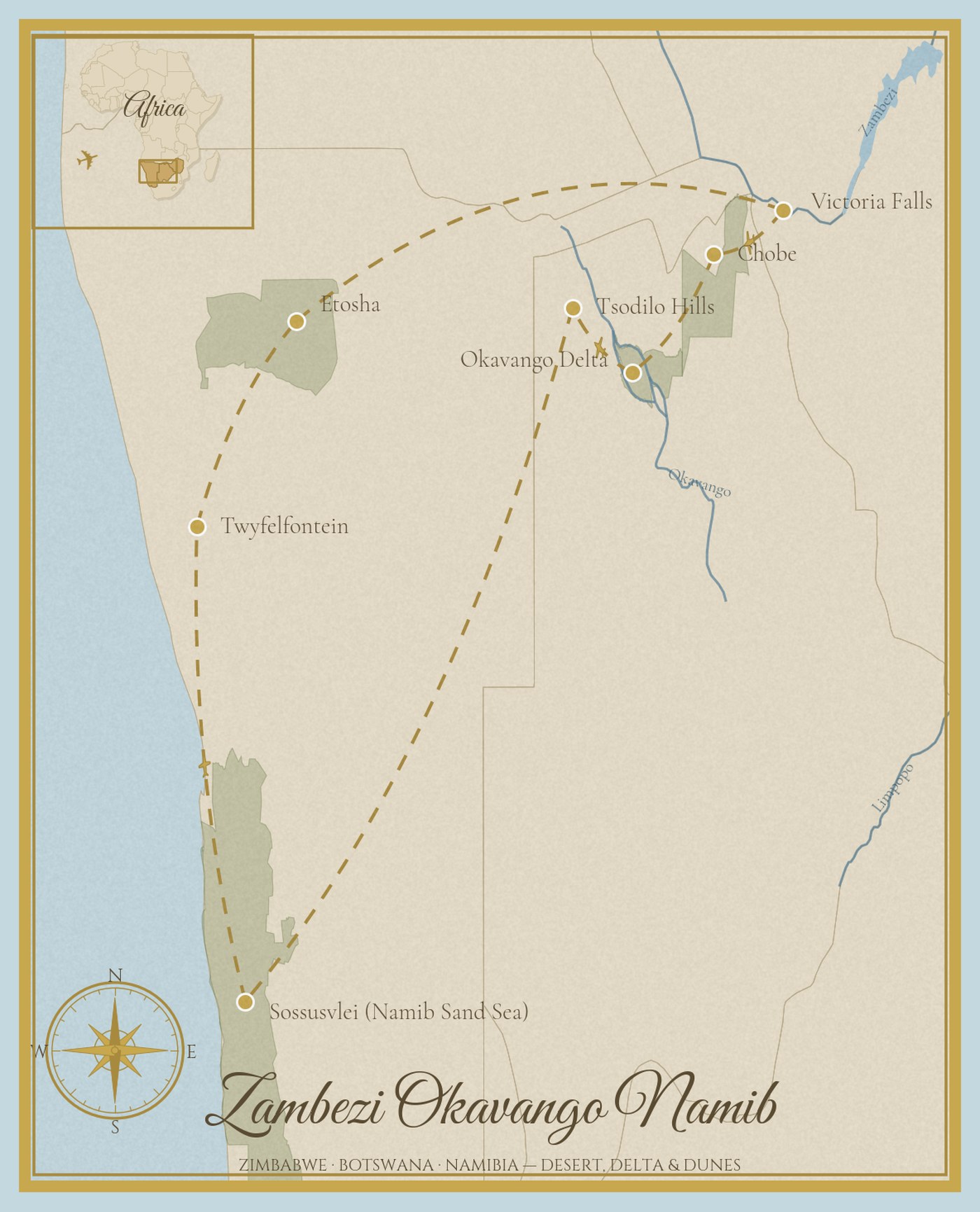
Victoria Falls · Hwange · Chobe · Okavango · Makgadikgadi · Namib · Skeleton Coast · Etosha · Victoria Falls
A Fly-In Crossing Through One of the World’s Largest Conservation Landscapes
The Kavango-Zambezi Transfrontier Conservation Area (KAZA TFCA) spans approximately 520,000 square kilometres across five countries: Angola, Botswana, Namibia, Zambia and Zimbabwe. It is one of the world’s largest transboundary conservation landscapes. This route focuses on four of them — Zambia, Zimbabwe, Botswana and Namibia — an area where elephants cross national borders along migration corridors that predate the borders themselves.
This fly-in expedition traces a private circuit through key southern KAZA landscapes and then extends beyond KAZA into Namibia’s desert and coastal wilderness. The route follows Africa’s greatest water systems — the Zambezi, the Chobe, the Okavango — crosses one of the oldest desert landscapes on earth, flies the Skeleton Coast, passes through Etosha and returns to Victoria Falls. Water to sand to shore to savannah to water. A circular journey through the full spectrum of southern African landscapes.
Three UNESCO World Heritage Sites anchor the journey: Mosi-oa-Tunya / Victoria Falls, the Okavango Delta and the Namib Sand Sea. Between them, some of the most significant elephant, lion, wild dog and predator populations remaining in southern Africa.
Victoria Falls — The Falls
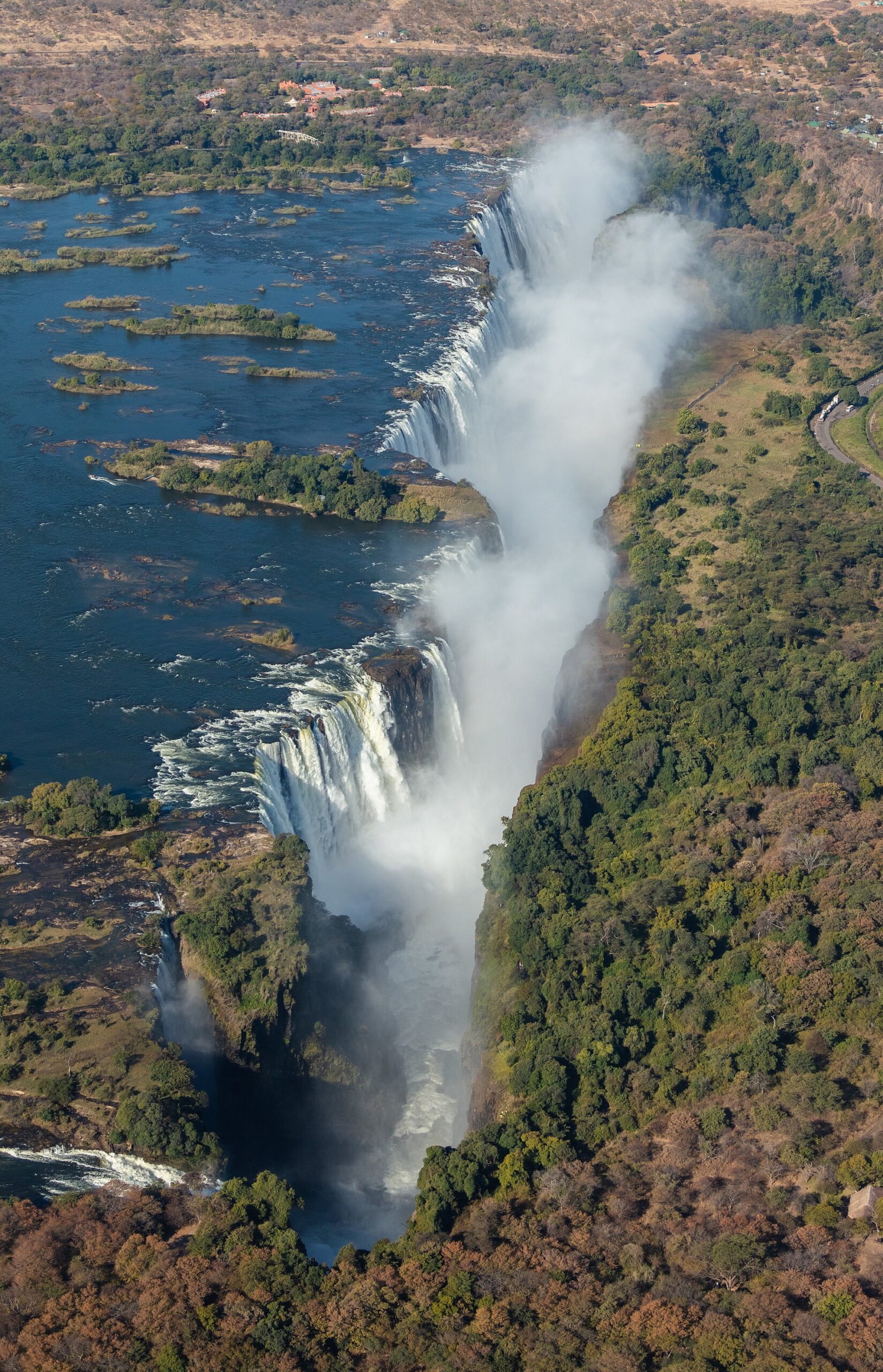
Mosi-oa-Tunya — “The Smoke That Thunders.” The Zambezi River drops 108 metres across a 1.7-kilometre-wide basalt gorge. It is one of the most spectacular natural landscapes on earth and the starting point of this transfrontier crossing.
Guided walk along the falls. Sunset cruise on the upper Zambezi. Optional: helicopter flight over the gorge, canoeing, or the Livingstone Island visit (seasonal, when water levels permit).
Hwange National Park — The Elephants
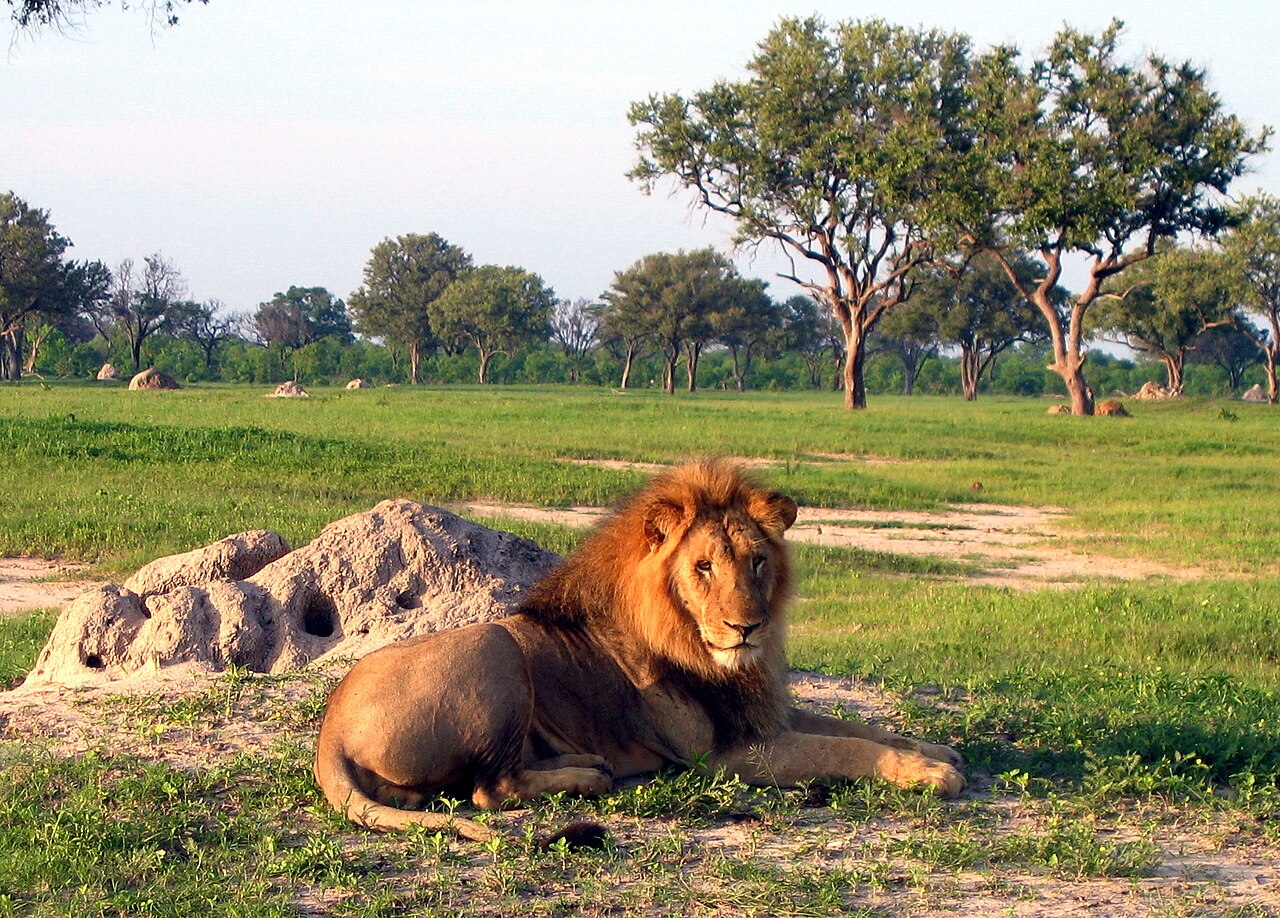
Charter flight to Hwange — Zimbabwe’s largest national park and home to one of the largest elephant populations in Africa. The park sits on the KAZA corridor that connects the Zambezi system to the Kalahari sand system — a migration route used by elephants long before it became a conservation boundary.
Morning and evening game drives. Waterhole hides. Hwange is known for its pumped waterholes — a legacy of the park’s founding that now provides some of the most reliable elephant viewing on the continent. Wild dog, sable antelope, lion, leopard.
Chobe — The River
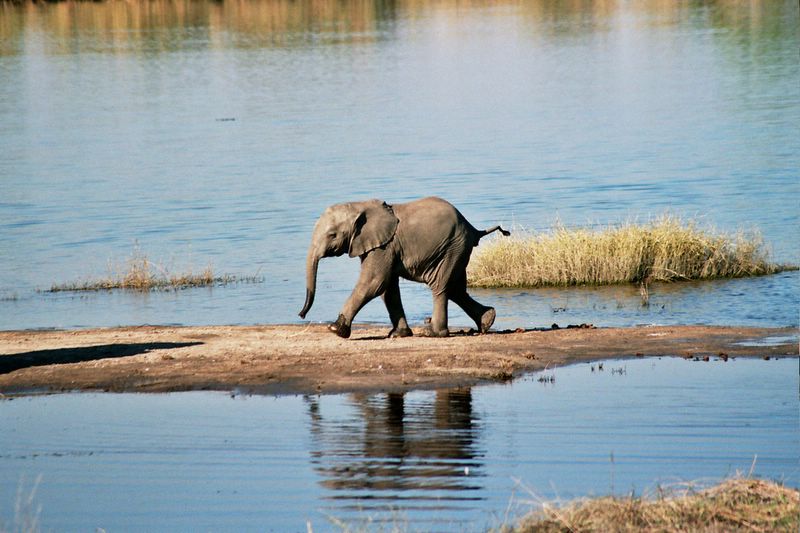
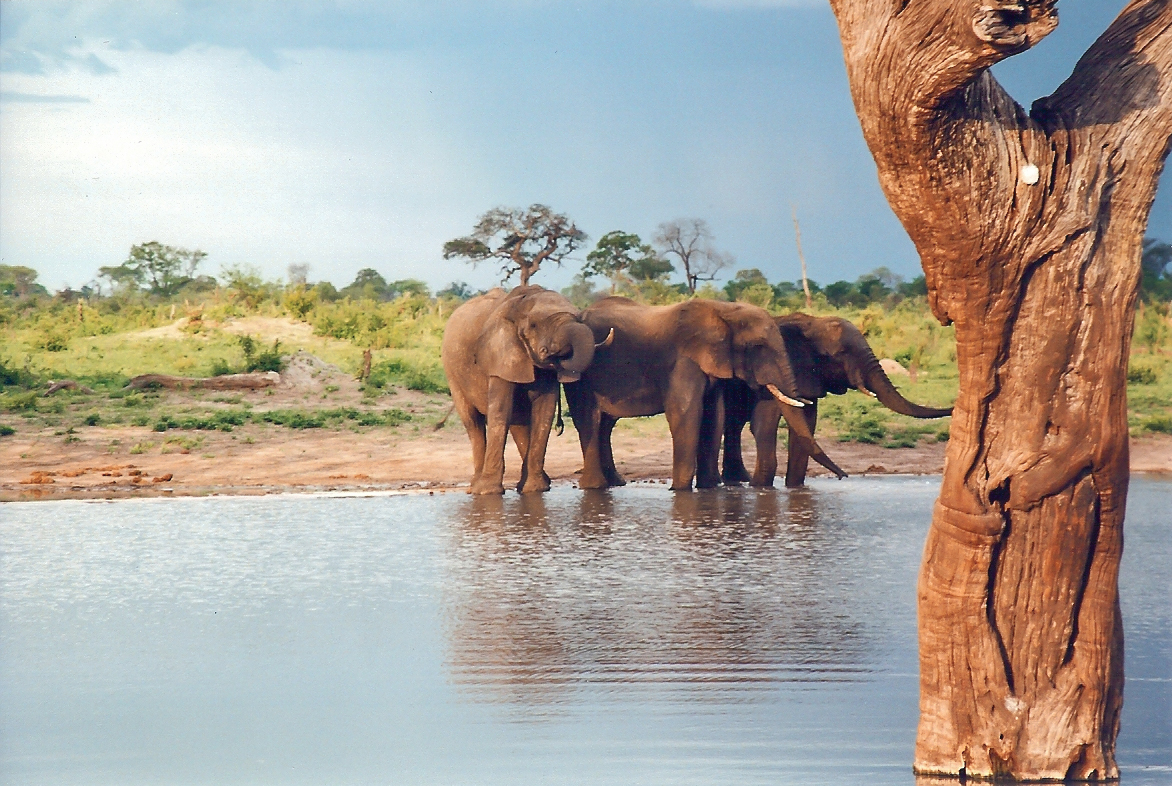
Cross into Botswana. The Chobe River frontage is one of Africa’s great wildlife corridors — where elephant herds wade across the river at dusk, hippos surface in the shallows, and African fish eagles call from the treeline. The Chobe system connects to both the Zambezi and the Okavango — the hydrological spine of the KAZA landscape.
River cruises at dawn and dusk. Game drives in the Savuti marsh — where the mysterious Savuti Channel appears and disappears over decades. Predator concentrations: lion, leopard, cheetah, wild dog, spotted hyaena.
Okavango Delta — The Delta
Fly into the Okavango Delta — one of the world’s great inland delta systems, where the Okavango River disperses into a vast alluvial fan in the Kalahari basin. UNESCO inscribed it in 2014 as one of the planet’s most significant wetland systems.
Mokoro (traditional dugout canoe) excursions through the floodplains. Walking safaris on palm-fringed islands. Game drives in the surrounding concessions. The Okavango is a place where water creates life in the middle of a desert — and where every channel, lagoon and island is shaped by the annual flood pulse from the Angolan highlands.

Makgadikgadi Pans — The Salt Pans
Fly south-east to the Makgadikgadi Pans — the remnant of an ancient super-lake that once covered much of northern Botswana. The salt flats stretch to the horizon in every direction. When the rains come, flamingos arrive in their tens of thousands. When the pans are dry, the landscape is lunar — white, flat, silent.
Sleep under the stars on the salt pans. Meerkat habituated colony visits. Quad biking across the flats (optional). The transition from the lush Okavango to the austere beauty of the pans is one of the most dramatic landscape shifts in southern Africa.
Namib Sand Sea — The Ancient Desert
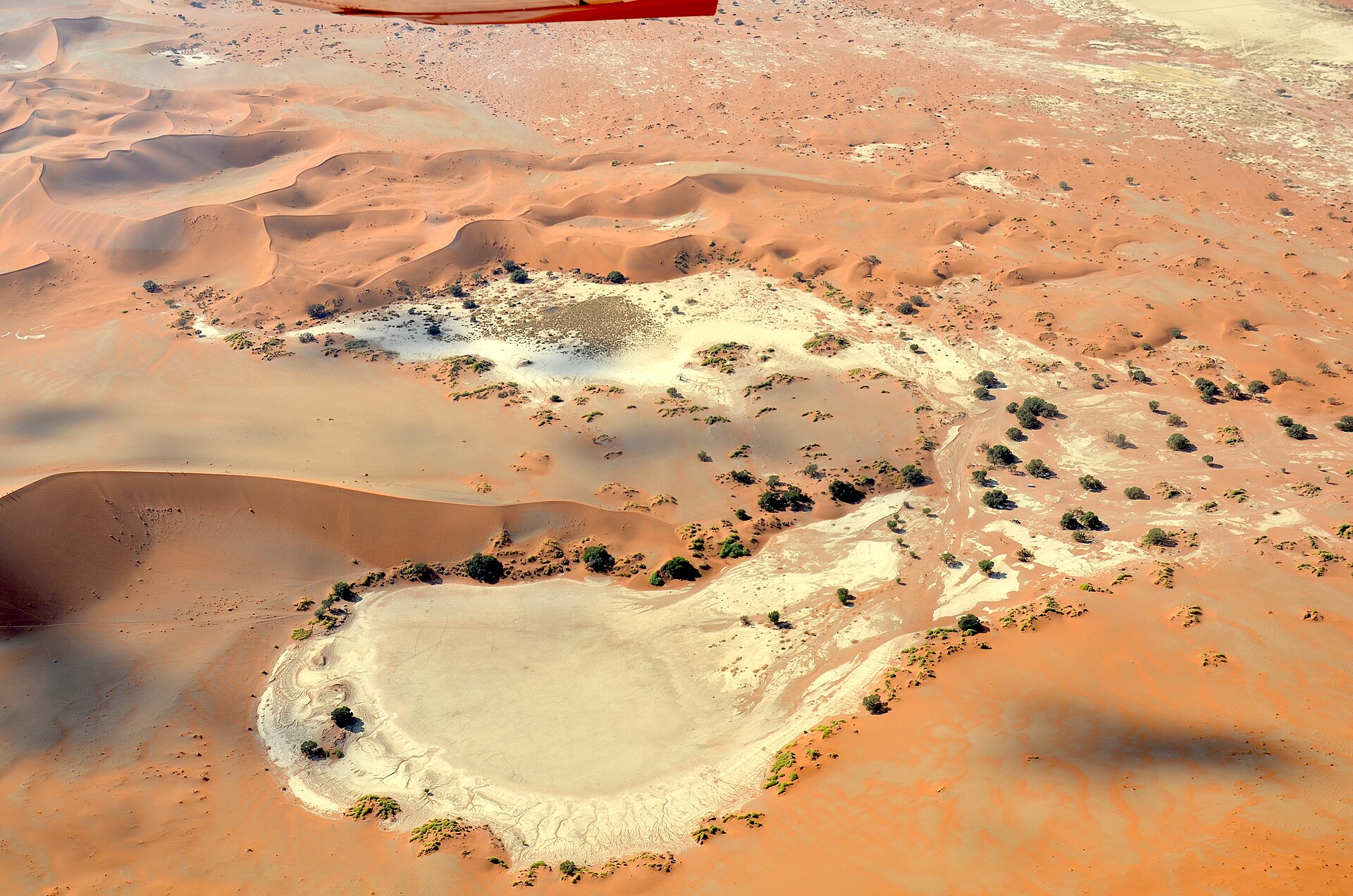
Fly west across the Kalahari into Namibia. The Namib Sand Sea — inscribed by UNESCO in 2013 — is the only coastal desert in the world with extensive dune fields influenced by fog. The dunes at Sossusvlei rise to over 300 metres. The Namib is often described as one of the world’s oldest desert landscapes, with geological processes stretching back tens of millions of years.
Climb Big Daddy or Dune 45 at sunrise. Walk the cracked white clay of Deadvlei — where 900-year-old camelthorn trees stand black against orange dunes. Hot-air balloon over the desert at dawn. The Namib is the journey’s geological finale: from the water of Victoria Falls to one of the oldest desert landscapes on earth.
Optional extension: combine with the Signature Safari via Windhoek departure.
Skeleton Coast & Brandberg — The Shipwreck Shore
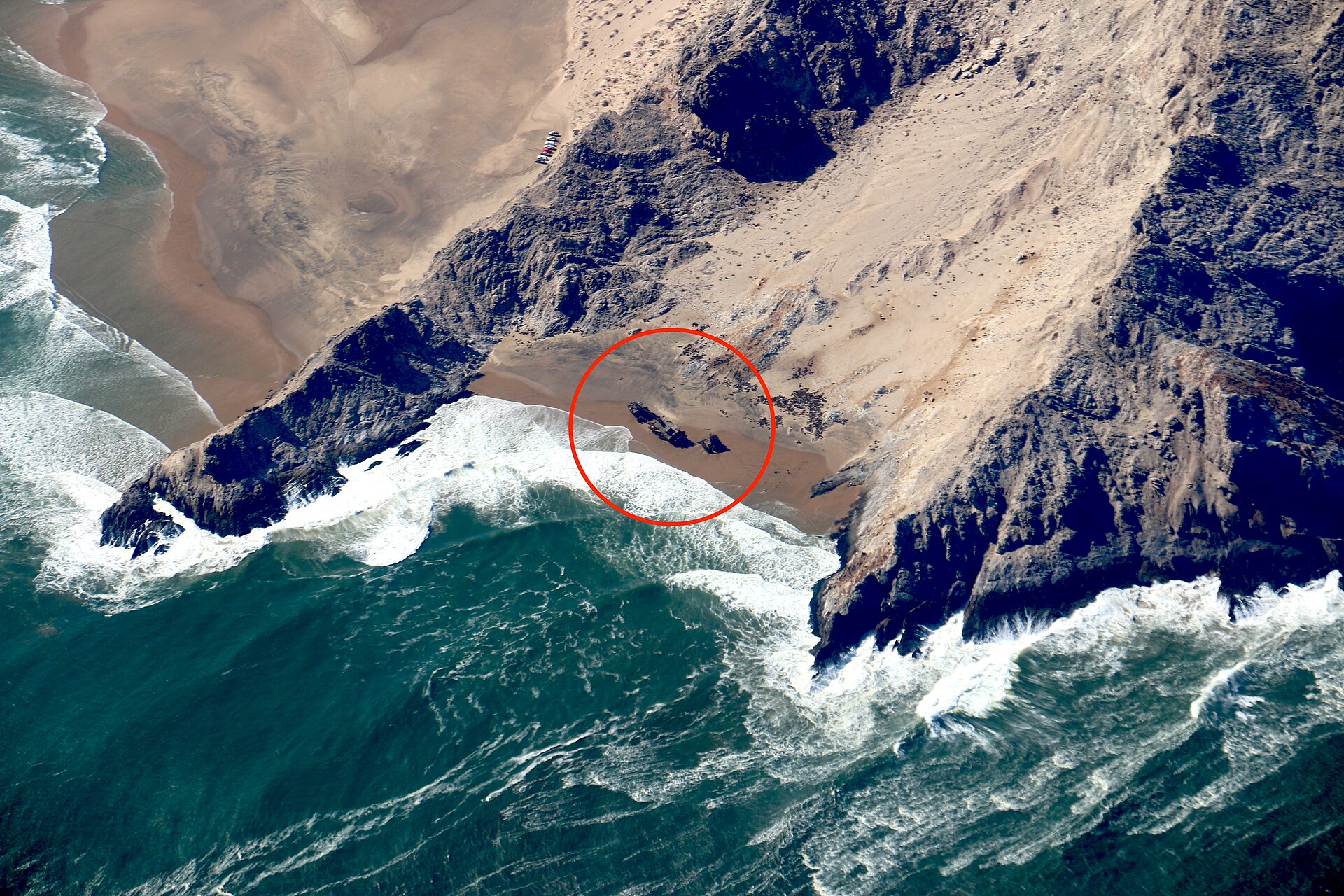
Fly north from Sossusvlei along the Skeleton Coast — one of the most dramatic scenic flights in Africa. Below: shipwrecks half-buried in sand, seal colonies, the cold Benguela fog rolling inland across dune fields that meet the Atlantic.
Land near Brandberg — Namibia’s highest mountain and home to the White Lady rock painting, one of the most significant examples of San rock art in southern Africa. The Brandberg massif rises 2,573 metres from the surrounding desert plain — an island of biodiversity in an ocean of stone and sand.
Optional stop at Twyfelfontein (UNESCO WHS 2007) — one of the largest concentrations of rock engravings in Africa.
Etosha — The Great White Place
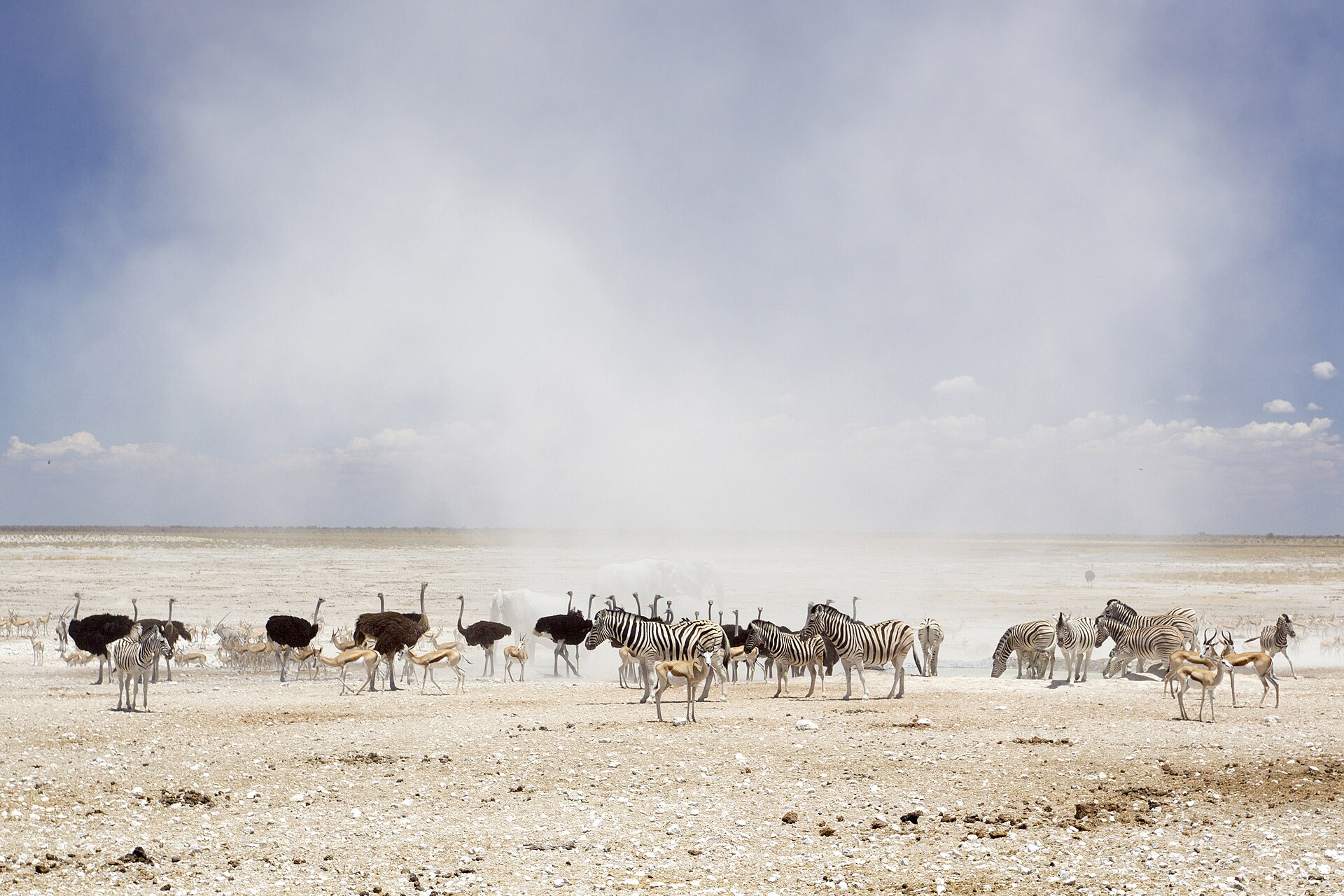
Although outside the KAZA core, Etosha extends the conservation logic of the journey into one of Namibia’s most important wildlife landscapes. Fly to Etosha National Park — defined by its vast salt pan visible from space and the floodlit waterholes where the wildlife comes to you. Etosha is one of the great game-viewing destinations of southern Africa: black rhinoceros, lion, elephant, cheetah, gemsbok, springbok and over 340 bird species.
The waterholes at Okaukuejo and Halali are legendary — after dark, the floodlights reveal a slow procession of animals arriving to drink. Black rhino sightings at the waterhole at night are an Etosha signature experience.
Victoria Falls — The Return
Fly east across Namibia’s Zambezi Region (historically known as the Caprivi Strip) — Namibia’s narrow panhandle that connects the KAZA landscape from west to east — and return to Victoria Falls. The circuit is complete: from the falls, through the elephant corridors, across the delta, through the salt pans and one of the oldest desert landscapes on earth, along the Skeleton Coast, through Etosha, and back to where the Zambezi drops into the gorge.
A final evening on the Zambezi. The journey that began with water ends with water.
Distances & Transfers
| Segment | Distance | Transfer | Time |
|---|---|---|---|
| Victoria Falls → Hwange | 180 km | Private Charter | 35 min |
| Hwange → Chobe (Kasane) | 200 km | Private Charter | 40 min |
| Chobe → Okavango Delta (Maun) | 260 km | Private Charter | 50 min |
| Okavango → Makgadikgadi | 250 km | Private Charter | 45 min |
| Makgadikgadi → Namib Sand Sea | 850 km | Private Charter | 2 hours |
| Sossusvlei → Skeleton Coast / Brandberg | 320 km | Private Charter | 1 hour |
| Brandberg → Etosha | 350 km | Private Charter | 1 hour |
| Etosha → Victoria Falls | 800 km | Private Charter | 2 hours |
All segments by private charter through selected licensed operators. Distances are approximate. Routings are subject to aircraft availability, border formalities and final operational validation.
Three Core and Two Optional UNESCO World Heritage Sites
The Zambezi’s great waterfall and the natural gateway into the KAZA transfrontier landscape. Start and end of the circuit.
One of the world’s great inland delta systems. Where the Okavango River disperses into a vast alluvial fan in the Kalahari basin.
The only coastal desert in the world with extensive fog-influenced dune fields. Geological processes stretching back tens of millions of years.
One of Africa’s largest concentrations of rock engravings. San hunter-gatherer ritual and symbolic landscapes. Optional stop during the Brandberg segment.
Over 4,500 rock paintings in the Kalahari. One of the highest concentrations of rock art in the world. Optional extension from the Okavango segment.
References to UNESCO World Heritage Sites are factual references to sites inscribed on the UNESCO World Heritage List. Southern Cross Experiences is an independent travel company and does not imply UNESCO endorsement of its journeys.
Lodges That Invest in the Land and Communities Around Them
Indicative accommodation examples, selected for location, character and their relationship with conservation and community initiatives. Final accommodation is confirmed during private route design.
Tujatane Trust community school. Women’s craft cooperative. Community vegetable gardens. Direct employment from surrounding villages.
Wilderness concession. Anti-poaching partnerships. Waterhole pumping programme supporting Hwange’s wildlife through the dry season.
Great Plains Conservation. Rhino reintroduction programme. Predator research. Community-based natural resource management partnerships.
Wilderness. Community trust concession. Wild dog and elephant research. Scholarship programmes for local communities in the delta region.
Natural Selection. San Bushman cultural programme. Meerkat habituation project. Brown hyaena research. Employment and training from local communities.
andBeyond. NamibRand Nature Reserve — one of the largest private reserves in Africa. Dark sky reserve. Africa Foundation community partnerships.
Natural Selection. Located within the Skeleton Coast National Park. Minimal-footprint design. Local community employment and environmental education.
Private game reserve bordering southern Etosha. Ongava Research Centre: rhino monitoring, predator tracking, wildlife veterinary support. Community conservancy partnerships.
The historic Edwardian hotel overlooking the gorge. One of Africa’s grand railway hotels, operating since 1904. The circuit’s closing chapter.
Designed Around You
This itinerary is a route framework, not a fixed departure. Each Southern Cross journey is privately curated around your dates, travel rhythm, interests and preferred level of comfort. The route can be shortened, extended, or combined with another SCE journey — subject to aviation logistics and operational feasibility.
Victoria Falls is also the starting point of the Signature Safari, the Great Africa Crossing and Great African Waters. Routes can be combined or extended with optional stops at Tsodilo Hills (UNESCO WHS).
Fly the Zambezi, Okavango & Namib Circuit
Plan a Private Version of This JourneyIndicative accommodation examples, selected for location, character and their relationship with conservation and community initiatives. Final accommodation is confirmed during private route design. References to UNESCO World Heritage Sites are factual references to sites inscribed on the UNESCO World Heritage List. Southern Cross Experiences is an independent travel company and does not imply UNESCO endorsement of its journeys. All routings, aircraft, accommodations and access arrangements are subject to availability, conservation regulations, border formalities, aviation approvals, weather conditions, seasonal wildlife movements and final operational validation.